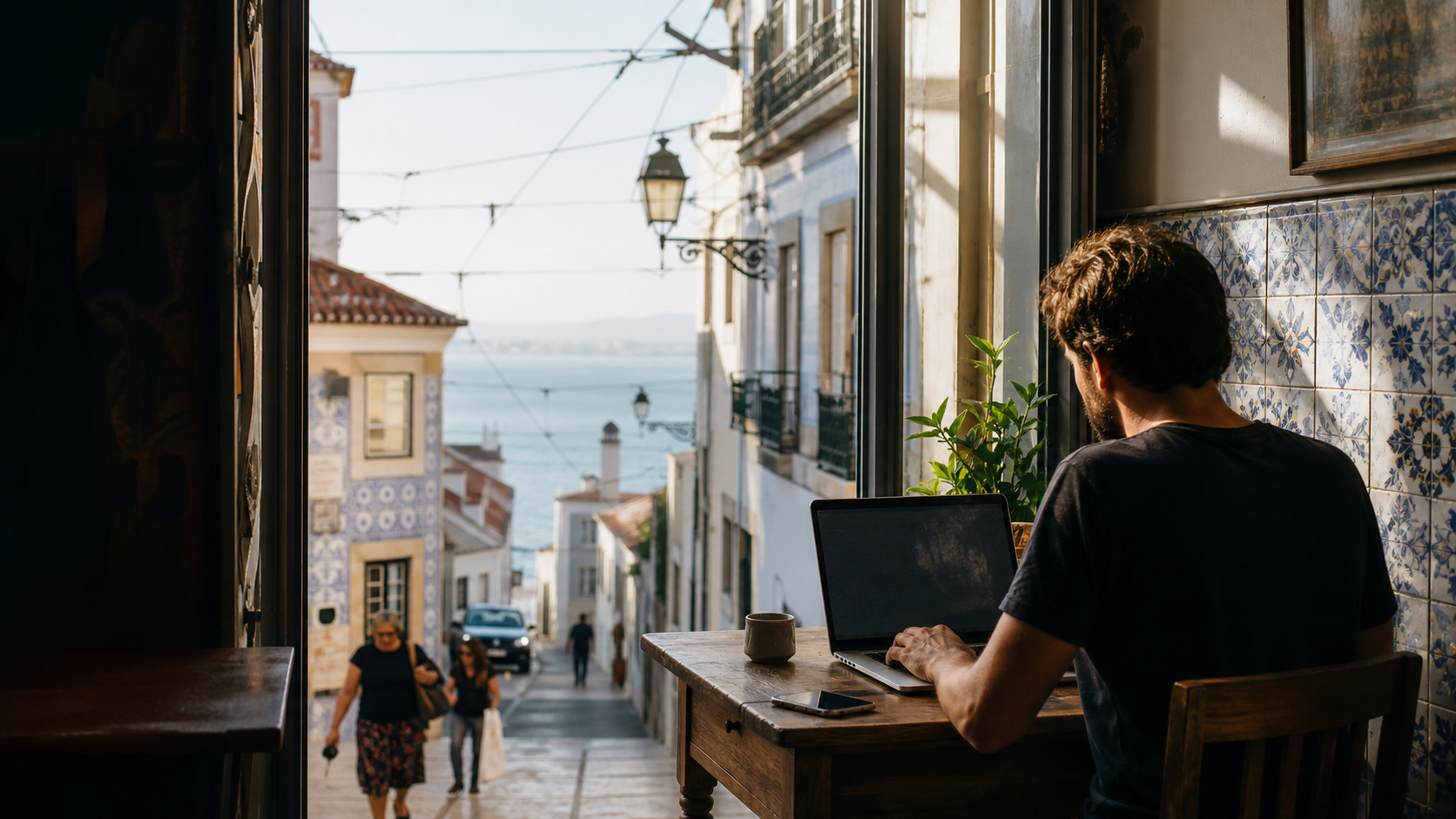
A practical Cape Town remote-work guide covering City Bowl, Green Point, Sea Point, the Waterfront, coworking, MyCiTi, backup power, safety, and realistic workday planning.
Published: August 1, 2026
Scope: practical planning, not personal legal or tax advice
Cape Town is one of the rare digital nomad cities where the landscape can genuinely improve your workweek. A morning run beside the ocean, a focused afternoon with Table Mountain outside the window, and a weekend that can become a hike, wine-country trip, or beach day without a flight are not marketing inventions. They are also not the whole decision. The city is spread out, housing is seasonal, public transport is useful but not universal, and electricity planning still deserves a place in every remote worker's setup.
- Best first base
- Gardens or Green Point for city access and a practical work routine
- Best for ocean walks
- Sea Point, with higher rent and a stronger lifestyle premium
- Best premium workday
- Waterfront coworking with food, views, and meeting infrastructure
- Best creative base
- Kloof Street and the Gardens corridor
- Infrastructure reality
- Check outage plans and backup power before trusting a listing
Do not assume that 'Cape Town has no load shedding today' means your apartment or coworking space is outage-proof. The City of Cape Town publishes area schedules and outage information, and Eskom-supplied areas can follow different arrangements. Ask the host or workspace exactly what stays powered, for how long, and whether the internet equipment is on backup.
The short answer: where should a nomad live?
Gardens is the best all-round choice for a first month if you want cafes, restaurants, Kloof Street, the City Bowl, and easy access to Table Mountain. Green Point is better for a modern, walkable lifestyle near the Waterfront and Sea Point, with a strong concentration of short-term apartments. Sea Point wins for ocean access and daily outdoor life, but you pay for it and may spend more time moving toward the city center. The Waterfront is convenient and polished, but it can feel like a self-contained district rather than a neighborhood.
Woodstock, Observatory, Claremont, and Newlands can all work for the right person. They are worth considering if you have a specific coworking venue, university or startup connection, or a longer lease that justifies learning the area. They are not interchangeable with the Atlantic Seaboard. Cape Town rewards choosing a small daily radius, so the best neighborhood is usually the one that keeps your work, food, exercise, and transport in the same part of the city.
Gardens and Kloof Street: the strongest work-life base
Gardens sits below Table Mountain and has the kind of mixed-use street life that makes a remote work stay easy: breakfast, groceries, fitness, restaurants, cafes, and evening options are all close enough to build a routine without a car. Kloof Street adds independent shops and a strong creative feel. You are close to the City Bowl without being inside the most corporate part of it, and you can reach the mountain, city center, and Atlantic side with relatively short rides.
Workshop17 Kloof Street is a natural anchor for this area. Its official page places the coworking precinct at 32 Kloof Street and describes a courtyard connecting the workspace with Long Kloof Studios, surrounded by restaurants, galleries, boutiques, and businesses. The page lists membership tiers rather than a simple tourist day-pass menu, so ask for the current visitor option if you are only in town for a week. The location itself is the product: you can work, eat, and walk the neighborhood without spending the day in traffic.
Gardens is not silent. Construction, nightlife, traffic, and steep streets can all matter depending on the block. Inspect the apartment in person if possible, and ask whether the bedroom faces Kloof Street, a courtyard, or a neighboring building. A view of the mountain is worth something, but a quiet room and a reliable desk are worth more when the project is due.
Choose Gardens if...
- You want the best balance of cafes, coworking, food, and city access.
- You like a creative neighborhood more than a resort-like waterfront district.
- You want Table Mountain and the City Bowl close without paying Waterfront prices.
- You are comfortable using rides for late evenings and checking the exact block.
Green Point and Sea Point: the Atlantic routine
Green Point is a strong choice for nomads who want a flat-ish daily loop around the promenade, cafes, apartment buildings, and the Waterfront. It is more modern and polished than Gardens, and the location makes it easy to combine ocean walks with city meetings. Sea Point extends that lifestyle further along the coast with a more residential rhythm, a long promenade, and constant access to the Atlantic, but it can feel farther from the creative and business center once traffic builds.
The best reason to choose Green Point is not just the sea. It is the ability to work close to the Waterfront while still having ordinary neighborhood services outside the hotel-and-mall bubble. If you choose Sea Point, verify the actual route to your coworking space and airport transfer at the times you will use them. A coastal apartment can look close on a map and still become inconvenient when the weather is poor or a client call ends after the public transport window.
The Atlantic side is also exposed to wind. A balcony that looks perfect in a still listing photograph may be unusable on a strong day. Treat outdoor space as a bonus, not your only work setup. Ask whether the apartment has heating, stable internet, and a comfortable indoor desk. Cape Town's bright summer photos hide a real winter weather pattern.
Waterfront: the easiest premium workday
The V&A Waterfront is ideal when you need polished meeting facilities, reliable food options, security layers, and a straightforward day between work and sightseeing. Workshop17 Watershed sits in the broader Waterfront ecosystem and is built around a creative-market setting rather than a conventional anonymous office. It is a good place to bring a client, meet another founder, or work for a day when your apartment is not suitable for calls.
The tradeoff is price and texture. Waterfront accommodation and food are usually more expensive, and a long stay there can feel like living inside a destination complex. Use it as a work anchor even if you live in Green Point or Sea Point, or choose it for a short premium chapter when convenience matters more than local neighborhood depth.
Coworking spaces worth comparing
Ideas Cartel +, Green Point
Ideas Cartel's Green Point space at 74 Prestwich Street lists more than 50 coworking desks, cafe seating, courtyard seating, two meeting rooms, uncapped fibre, air conditioning, parking, security cameras, a gym, and access to other Ideas Cartel locations. The current page lists coworking hours from 7am to 5pm on weekdays, a monthly unlimited coworking pass at R2,000 excluding VAT, and a day rate of R200 excluding VAT further down the page. Confirm the live offer before booking because day access, VAT, and location availability can change.
This is the best fit for a nomad who wants a workday with cafe energy, a courtyard, and the option to move between desk and meeting room. It is less compelling if you work late at night or require a fully silent environment every day. The ability to use all Cape Town Ideas Cartel locations is most valuable once you are staying long enough to move around the city.
Workshop17 Kloof Street
Workshop17 Kloof Street is the strongest creative-neighborhood option. The official page describes fast uncapped internet, hot-desking tiers, meeting and event discounts, cafe pricing, and access to a wider location network depending on membership. The space is surrounded by the restaurants, galleries, and businesses of Kloof Street, so it is useful for a full workday that needs a real lunch and a walk between calls.
Workshop17 Watershed and Century City
Watershed suits the Waterfront workday and client meeting. Century City is useful if you are staying in the northern suburbs or want a more business-park setting. Workshop17's membership plans vary by access level and location, so do not compare a hot-desk allowance with an unlimited plan as if they were the same product. Ask how many hours, locations, meeting-room credits, and access times are included.
Load shedding: build a resilient work stack
Power planning in Cape Town is less dramatic when you make it boring. The City of Cape Town publishes schedules for areas 1 through 16 and advises residents and businesses to keep backup batteries working for electrically operated gates, garage doors, and security systems. That guidance is directly relevant to nomads because a building can have electricity inside while the gate, elevator, router, or access system behaves differently.
- Ask your host which electricity provider and area schedule apply to the exact address.
- Confirm whether the apartment's Wi-Fi router, fiber ONT, desk outlets, and building access are on backup.
- Carry a charged power bank that can keep your phone and hotspot running through a call.
- Keep a local SIM or eSIM with enough data to tether for a short outage.
- Have one coworking or cafe fallback with known backup power, and test it before a deadline.
- Download client documents and meeting links so a brief internet interruption does not become a crisis.
Do not assume a large coworking brand automatically solves every outage. Ask the venue whether backup covers the whole floor, only lights, or the specific desk sockets. Ask how the internet behaves during a cut and whether meeting rooms remain available. A venue that is honest about its limits is more useful than one that simply advertises 'backup power' without explaining the system.
Getting around without making the city exhausting
MyCiTi is the most useful public transport layer for many nomads. Its official system describes a card-based network with tap-in and tap-out, a trip planner, live updates through the app, and routes stretching from Atlantis in the north to Hout Bay in the south and Sea Point in the west toward Khayelitsha in the east. It will not replace every ride, but it can connect the City Bowl, Atlantic Seaboard, Waterfront, and selected northern areas without the cost of daily ride-hailing.
Set up the myconnect card early and learn one route before your first busy workday. Use a ride for late-night or unfamiliar trips rather than trying to turn public transport into a test of personal courage. Cape Town's geography makes neighborhood choice a transport decision: living near a reliable route can be more valuable than saving a small amount on rent in a disconnected area.
Safety and the practical Cape Town routine
Cape Town is rewarding when you treat it as a city with real urban variation, not a resort with a mountain behind it. Keep your apartment search and evening plans specific to the block. Avoid walking long distances alone with a laptop after dark, use known transport, and do not leave devices visible in a parked car. Ask the host about building access, neighborhood movement, and local advice instead of relying on a generic safety score.
The city also rewards daytime structure. Finish your demanding work while you have good light and transport options, then use the afternoon for a walk or short trip. Save mountain hikes, peninsula drives, and wine-country weekends for days when the weather and road conditions are clear. The lifestyle advantage is real, but it is most enjoyable when it does not turn every weekday into a logistics problem.
A monthly setup that actually works
- First week: live in Gardens, Green Point, or Sea Point and test two coworking spaces before choosing a pass.
- Second week: buy or load a myconnect card, learn one MyCiTi route, and confirm your apartment's outage plan.
- Third week: move to a longer housing agreement only after checking noise, wind, desk quality, and commute at work hours.
- Fourth week: choose whether the city suits your next season based on work reliability, not only the scenery.
For remote workers, the best Cape Town setup is usually a comfortable apartment in Gardens or Green Point, a flexible coworking pass for calls, a MyCiTi card for daytime movement, and a small backup-power kit. Add Sea Point when ocean access is your main daily habit. Add the Waterfront when meetings and convenience justify the premium. Add the southern suburbs only when a specific local routine makes the distance worthwhile.
Visa and longer stays
South Africa's remote-work route is not something to infer from tourist entry rules or from an apartment host's advice. Our South Africa Remote Work Visa guide covers the Section 11(1)(b)(iv) route and the documents that need closer attention. Confirm the current position with South African authorities before making a long lease, and keep tax residence separate from immigration permission.
Official sources and related Nomad Terminal guides
Coworking prices, venue access, MyCiTi fares, outage schedules, and visa rules can change. Check the official page for the exact date of your stay and keep a backup work location.
Make the next decision with the same context
Move from inspiration to the legal stay, city budget and risk checks that determine whether the plan works.