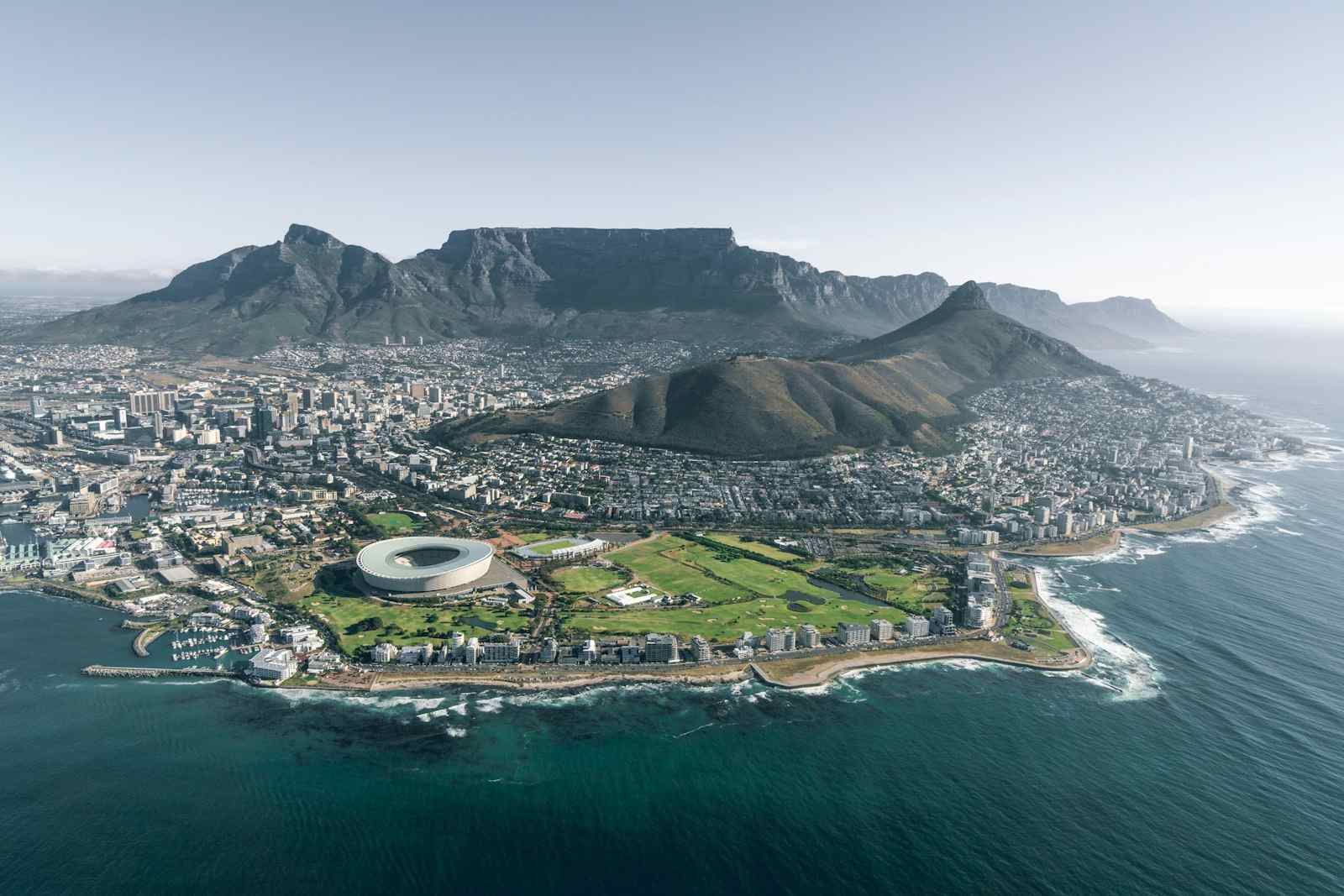
    Table Mountain rising above Cape Town, South Africa

    🏔️ Cape Town

    Mountains, ocean, and Africa's top coworking scene

    ~$1300/mo
    60 Mbps wifi
    Safety 6/10
    Growing community

    Photo: Unsplash

    Cost of living

    ~$1300/mo

    Typical wifi speed

    60 Mbps

    Safety score

    6/10

    Best months

    Nov, Dec, Jan, Feb, Mar

    English ease

    9/10

    Nomad community

    Growing

    Everything you need to stay in Cape Town

    Practical overview for remote workers: visa path, housing budget, work setup, health, and getting around.

    Visa & legal

    Remote Work Visa (Section 11(1)(b)(iv))

    Max: 1 year initially, renewable up to 3 years total

    Income: ~ZAR 650,976/year (~$38,500)

    Involved
    Full visa details

    Housing & cost

    Mid-range solo budget ~$1300/mo

    Housing alone typically ~$600/mo for a furnished studio in a nomad-popular area.

    Book via long-term Airbnb, local groups, or coliving for better rates than night-by-night hotels.

    Work setup

    Wifi ~60 Mbps in cafés/coworking

    1 coworking space listed below

    Community size: Growing · English ease 9/10

    Health & insurance

    Safety score 6/10

    Carry international travel/health insurance that covers your stay length. Local clinics vary — see our insurance comparison.

    Compare insurance

    Climate & best time

    Mediterranean, dry summers Nov–Mar, wet mild winters Jun–Aug

    Best months: Nov, Dec, Jan, Feb, Mar

    Tax & money

    Standard tax residency rules apply after 183 days

    Tax residency is separate from visas. Track days carefully and read our tax guides before long stays.

    Tax residency basics

    About Cape Town for nomads

    Table Mountain on one side, the Atlantic on the other, and a coworking culture mature enough to rival European capitals — Cape Town anchors Africa's fastest-growing nomad scene.

    Cape Town's setting does most of the marketing for it: Table Mountain rising directly behind the city, a coastline that shifts from surf beaches to wine country within an hour's drive, and a coworking scene mature enough that it no longer feels like an emerging destination. The real planning question isn't whether Cape Town works for nomads (it clearly does), it's which of its very different neighborhoods actually fits how you want to live.

    Best Neighborhoods for Digital Nomads in Cape Town

    • Sea Point, the easiest all-round option: walkable, social, along the coastal promenade, close to cafés and gyms, and relatively safe
    • Woodstock, a former industrial area turned creative hub with design-led coffee shops, better suited to anyone who prefers a local, artsy feel over polish
    • Observatory, the affordable, eclectic pick near the university, with a strong café and coworking scene and a younger crowd

    Food, Culture, and Daily Life

    Cape Town's food scene punches well above what the cost of living suggests: excellent wine, fresh seafood, and a genuine braai (barbecue) culture that locals take seriously. The city's daily rhythm bends around the mountain and the ocean, hiking and surfing before or after work are normal, not aspirational, and the light and landscape make it one of the more visually striking places on this list to simply live day to day.

    Getting There and Getting Around

    Cape Town International Airport handles both domestic and international arrivals and sits about 20 minutes from the city center by car. Private shuttles and pre-arranged airport transfers are the recommended option for longer or late-arrival journeys. Once in the city, walking is genuinely pleasant and safe in Green Point, Sea Point, and Gardens during daylight hours, though a car or ride-hailing app becomes more important after dark or for reaching the Winelands and other day trips.

    Daylight walking in central, nomad-popular neighborhoods is generally safe. After dark, inconsistent street lighting and periodic load shedding (rolling power cuts) can affect visibility and safety, so plan evening transport rather than walking, and keep a headlamp or phone light charged for outages.

    Why nomads love it

    • Stunning natural scenery minutes from the city center
    • English-first, easy to settle into
    • Strong founder/startup and coworking culture

    Watch out for

    • !Safety varies sharply by neighborhood — stick to well-reviewed areas, avoid walking alone at night
    • !Long-haul flights from the Americas/Asia

    What a month actually costs

    Accommodation (furnished 1BR/studio)$600
    Food & groceries$350
    Coworking hot desk$130
    Local transport$80
    SIM / mobile data$20
    Gym, fun & everything else$120
    Typical monthly total~$1300

    Directional estimate for a mid-range solo nomad — lean living can run ~30% less, comfort-first ~50% more. Use our cost calculator for custom stays.

    Coworking & workspaces

    Workshop17

    Multiple premium locations across the city

    $180/mo · 80 Mbps

    Things to do in Cape Town

    Curated for remote workers — culture, food, outdoors, and day trips you can fit around deep-work blocks.

    Table Mountain cableway (weather window)

    Outdoors

    Check wind cams — when it’s open and clear, drop everything and go.

    Nomad tip: Mornings often have better wind odds.

    Cape Peninsula day (Cape Point / penguins)

    Day trip

    Full-day drive: Chapman’s Peak, penguins, and lighthouse views.

    V&A Waterfront cautiously + Bo-Kaap colors

    Neighborhood

    Touristy waterfront for errands; Bo-Kaap for photos and Cape Malay food.

    Wine tasting in Stellenbosch / Franschhoek

    Day trip

    World-class wine valleys under an hour away.

    Nomad tip: Join a group transport — don’t drive after tastings.

    Sunset at Signal Hill or Camps Bay

    Outdoors

    Free views and beach energy on good weather evenings.

    Braai culture & food markets

    Food

    Weekend markets (e.g. neighbourhood ones) for social eating.

    Book tours & experiences

    Live inventory from Viator for Cape Town, South Africa.

    Guides for planning your stay