If you’ve read that South Africa’s digital nomad option is a “Section 11(2) visa,” that’s actually wrong, and it’s a mistake repeated across a surprising number of nomad blogs. The real remote-work visa is Section 11(1)(b)(iv) of the Immigration Act. Section 11(2) is a different visa entirely, for short-term work hosted by a South African company. Mixing them up means researching the wrong requirements.
- Official name
- Remote Work Visa, Section 11(1)(b)(iv)
- Best for
- High-earning remote employees & freelancers
- Income requirement
- ~ZAR 650,976/year (~$38,500)
- Duration
- 1 year initially, renewable up to 3 years total
- Processing time
- 4–8 weeks (up to 10 in some regions)
- Where to apply
- Embassy, consulate, or VFS Global abroad. Not inside South Africa
Who Qualifies
- Annual income of at least ~ZAR 650,976 (~$38,500) from remote employment or freelance work with foreign clients/employer
- No permission to take up formal employment with, or perform services for, a South African entity, income must be exclusively foreign-sourced
- Standard visa documents: passport, application form, proof of accommodation
Required Documents
- Valid passport
- Proof of foreign-sourced income meeting the threshold (contracts, pay slips, or invoices)
- Proof of accommodation in South Africa
- Health insurance valid for the visa period
- Police clearance certificate
How to Apply: Step by Step
- Confirm you meet the ~ZAR 650,976/year income threshold with documented, foreign-sourced income.
- Gather all required documents, including a police clearance certificate.
- Book an appointment at a South African embassy, consulate, or VFS Global centre in your country of residence. This visa cannot be applied for from within South Africa.
- Submit your application in person with the full document set.
- Wait for processing, typically 4–8 weeks, occasionally up to 10.
- Once approved, enter South Africa within the visa’s validity window.
What Section 11(2) Actually Is (For Comparison)
The Section 11(2) Short-Term Work Visa is for foreign nationals carrying out short-term, specific work activities hosted by a South African company: the opposite use case from remote work for a foreign employer. If a source describes South Africa’s nomad option using this section number, treat that as a sign the information may be outdated or conflated with the wrong visa.
Bringing Family: Dependents on the Remote Work Visa
This is one of the more family-friendly long-term visas on this list. Spouses and dependents can accompany the main applicant, and, unlike some other countries’ nomad visas, they generally don’t need to prove their own separate income to qualify.
- Each accompanying spouse or dependent requires their own visa application, submitted jointly with the main applicant’s file
- Dependents need their own supporting documents, birth certificates for children, marriage certificates for spouses
- Additional visa fees apply per dependent
- Each family member needs their own medical and radiological (chest X-ray) reports: budget real time and cost for this if traveling with a larger family
- School-age children may need a separate Study Permit to attend local schools, the dependent visa alone typically doesn’t cover school enrollment
What Section 11(2) Actually Is (For Comparison)
The Section 11(2) Short-Term Work Visa is for foreign nationals carrying out short-term, specific work activities hosted by a South African company: the opposite use case from remote work for a foreign employer. If a source describes South Africa’s nomad option using this section number, treat that as a sign the information may be outdated or conflated with the wrong visa.
Taxes
South African tax residency generally follows the standard 183-day rule. Spend fewer than 183 days in a 12-month period and you typically avoid South African tax residency; cross that threshold and standard South African tax rules start to apply.
Can I apply for the Remote Work Visa while already in South Africa on a tourist visa?
No. This visa must be applied for at a South African embassy, consulate, or VFS Global centre in your country of residence, not from within South Africa.
Is the income threshold per person or per household?
The published threshold (~ZAR 650,976/year) applies to the main applicant’s foreign-sourced income; check current embassy guidance for how dependents’ income or accompanying family affects the calculation.
Can I work for a South African company on this visa?
No: the Remote Work Visa explicitly excludes taking up employment with, or performing services for, a South African entity. It’s built entirely around foreign-sourced income.
Do my spouse and kids need to show their own income to qualify as dependents?
Generally no: dependents can typically be included without proving separate income streams of their own, though they do need their own supporting documents (birth/marriage certificates) and medical/radiological reports.
Will my kids automatically be able to attend school in South Africa on this visa?
Not necessarily: school-age dependents may need a separate Study Permit to enroll in local schools, since the dependent visa itself may not cover school attendance.
Related Destinations for South Africa Remote Work Visa
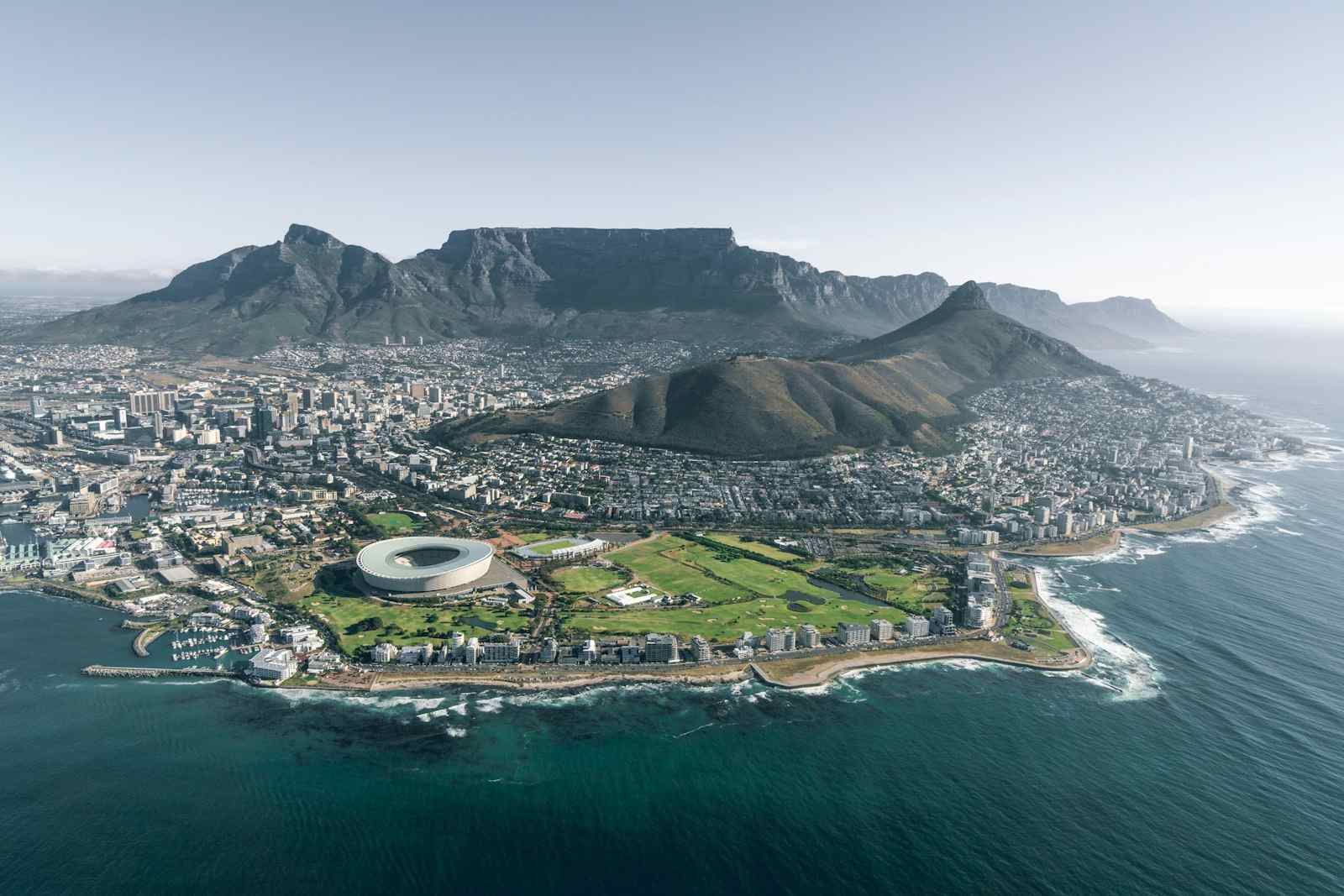
Cape Town stands out as the premier nomad base in South Africa:
- Cape Town: Stunning scenery, strong WiFi in key areas, established expat/nomad scene (~$1,800–2,500/mo).
- Johannesburg or Durban for other options with varying costs and vibes.
City Links
More Value for Nomads
South Africa pairs well with strong safety planning and family considerations. Cross-reference our dedicated guides for complete prep.
Essential Cross-Links