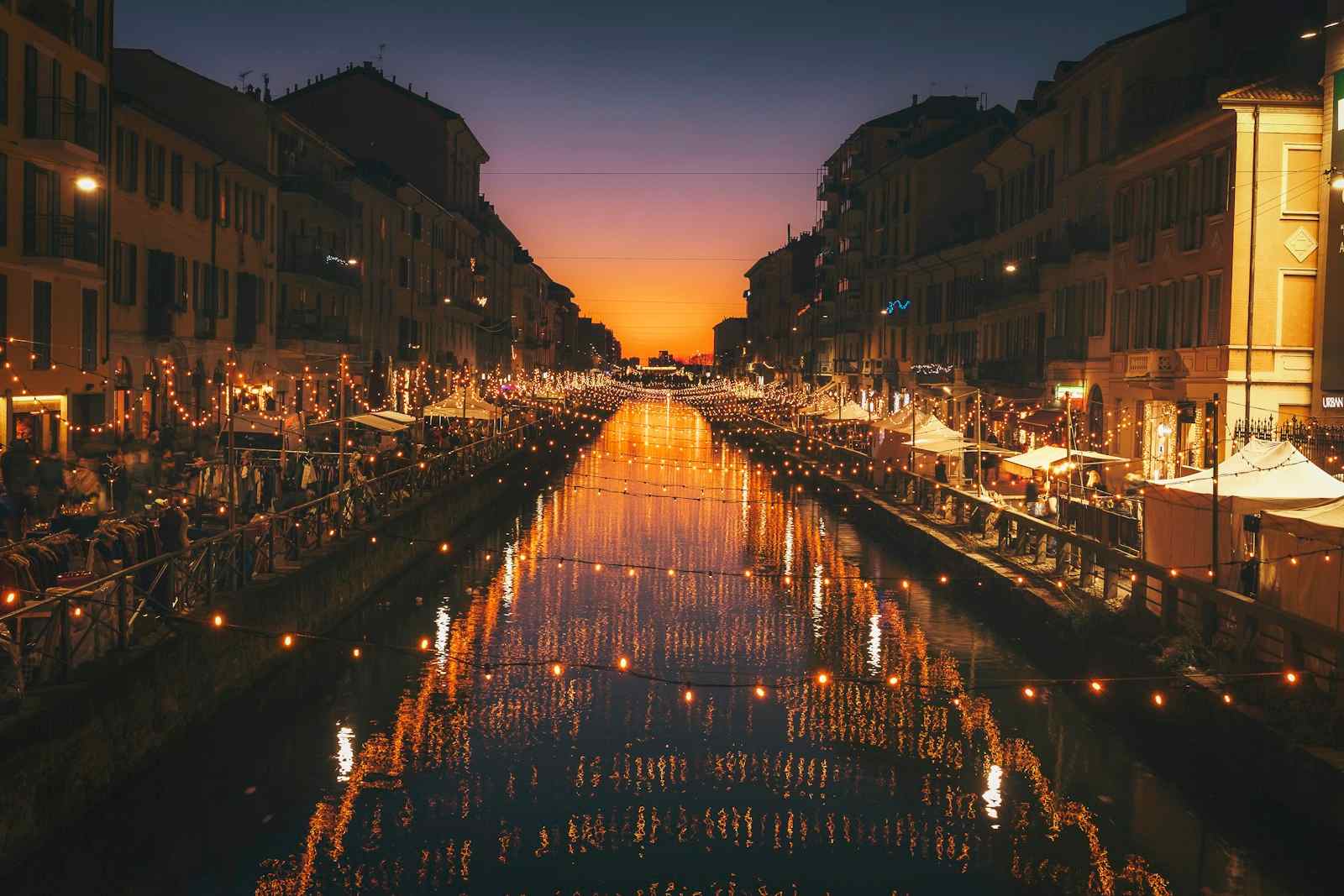
Milan runs at a genuinely different pace than the rest of Italy, fashion, finance, and design concentrated into one fast-moving city that feels closer to a Northern European business capital than the postcard version of Italy most people picture. It’s the most expensive Italian base on this site, and also the most professionally connected.
Where to base yourself in Milan: Navigli or Porta Romana
- Navigli, built around historic canals with bars, restaurants, and an aperitivo scene, the most characterful district and best for creatives and younger nomads, one-bedrooms €1,000 to €1,600/month
- Porta Romana, residential, safe, and well-connected, the neighborhood longer-term Milan expats tend to recommend, similar pricing to Navigli
- Isola, a transformed former working-class district blending street art and independent shops with proximity to the Porta Nuova corporate zone, €1,100 to €1,700/month
Food, Culture, and Daily Life
Milan’s aperitivo culture, an early-evening drink that comes with a genuinely substantial spread of food, is close to a daily ritual for much of the city and a good, cheap way to socialize after a work day. The city’s fashion and design industries give it a polished, work-hard energy that’s distinct from the more relaxed pace found in Florence or further south, and its train connections make weekend trips to Lake Como, Turin, or Venice easy.
Getting There and Getting Around
Milan has one of Europe’s better airport-to-city train connections, with both Malpensa and Linate airports served by direct rail links into the center. Once settled, the metro system is extensive and covers Navigli, Porta Romana, and Isola comprehensively, making a car unnecessary for daily life.
Is Milan worth the extra cost over Florence?
For nomads prioritizing career networking, coworking infrastructure, and international business connections, yes. For lifestyle and atmosphere at a lower cost, Florence remains the better value.
Navigli or Porta Romana, which fits better?
Navigli for atmosphere, nightlife, and a younger crowd; Porta Romana for a calmer, more residential feel that longtime Milan expats tend to prefer for longer stays.