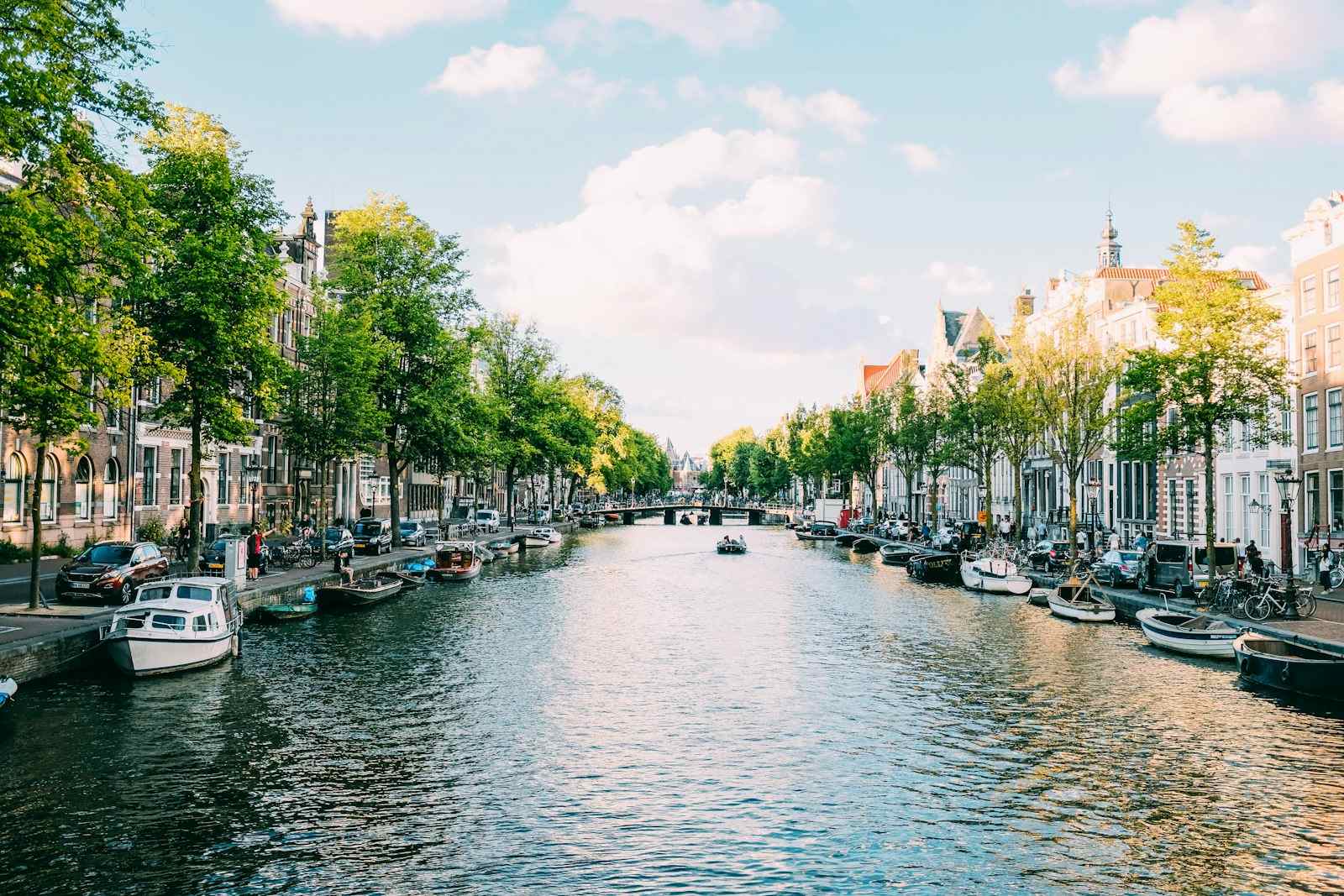
Amsterdam offers a rare combination for a major European capital: canals and centuries-old architecture on a scale that never stops being photogenic, paired with genuinely reliable infrastructure and one of the safest big-city environments in the world. The tradeoff is cost, this is one of the more expensive bases covered on this site, and it needs to be weighed against Amsterdam’s real advantages rather than assumed away.
Where to base yourself in Amsterdam: Jordaan or De Pijp
- Jordaan, postcard Amsterdam with narrow streets and canal houses, central and beautiful but expensive and touristy, with coworking options like StartDock and Mindspace Herengracht nearby
- De Pijp, the self-described brunch capital of the city, lively bar and café scene popular with a younger crowd
- Amsterdam Oost, a well-connected, slightly more affordable alternative with a strong café and coworking presence without Jordaan’s premium
Food, Culture, and Daily Life
Cycling is Amsterdam’s actual transport backbone, not a novelty, and most nomads adopt a bike within their first week simply because it’s the fastest way to get anywhere. The city’s café culture, canal-side terraces in summer, and a generally liberal, orderly social atmosphere make daily life easy to settle into, even as rent and general costs run well above most other European nomad hubs.
Getting There and Getting Around
Schiphol Airport connects to Amsterdam Centraal by train in about 15 minutes, one of the most efficient airport-to-city links in Europe, with taxis running €40 to 55 for those who prefer door-to-door service. Once in the city, cycling covers most daily needs, supplemented by an efficient tram and metro network for longer distances or bad weather.
Is Amsterdam worth the cost for digital nomads?
For nomads who value safety, infrastructure, and a genuinely walkable and bikeable historic city above budget, yes. Cost-focused nomads will generally find better value in Southern or Eastern Europe.
Do I need a bike in Amsterdam?
It’s not strictly required, the tram and metro network is solid, but most residents and long-term nomads end up cycling since it’s genuinely the fastest way to move around the city center.