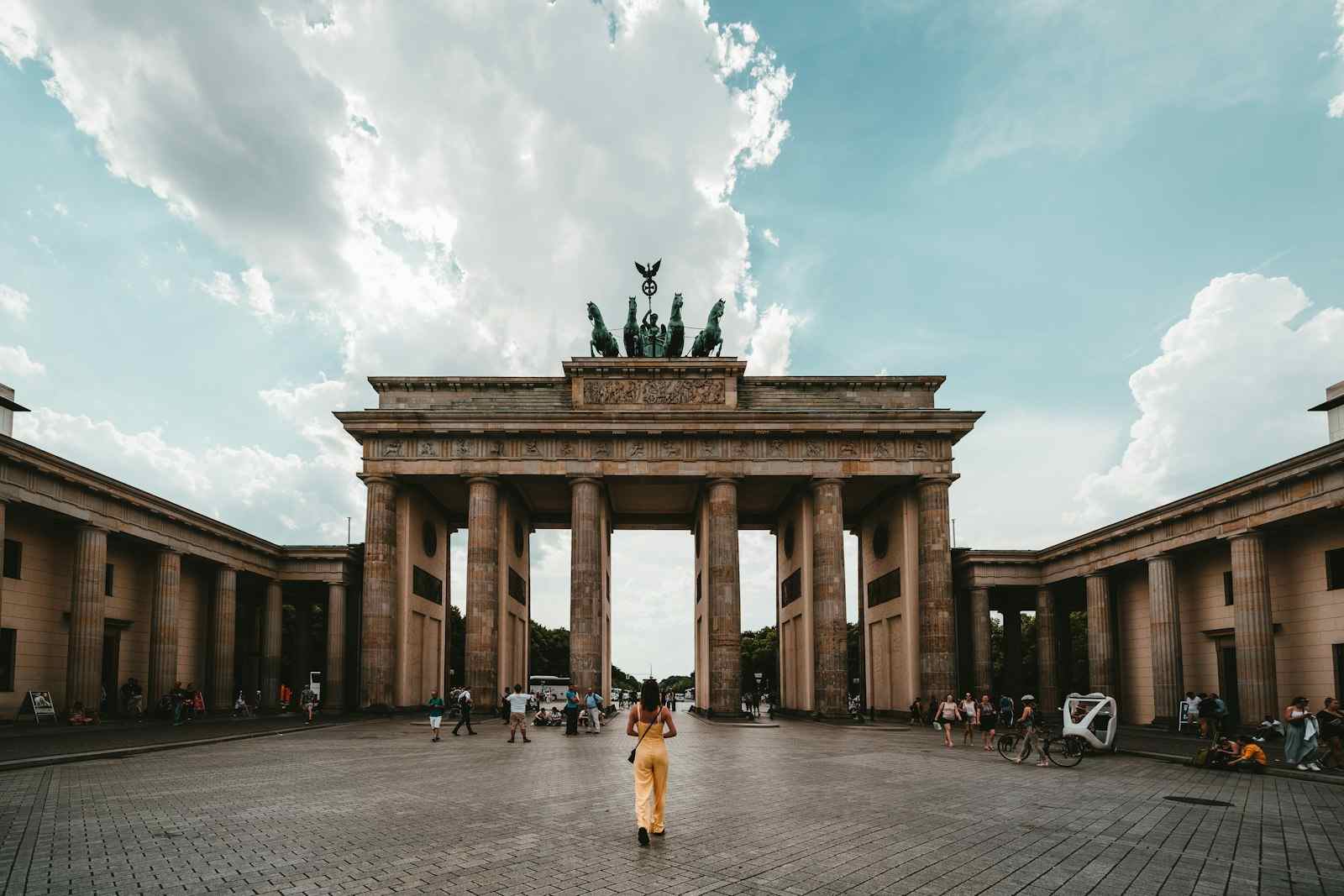
Berlin still runs on the reputation it built two decades ago as Europe’s cheap, creative, anything-goes capital, and while the cheap part has faded, the creative, unpolished, genuinely international character has not. It’s a city built in sprawling districts rather than one dense center, so choosing a neighborhood here matters more than in almost any other European nomad hub.
Where to base yourself in Berlin: Kreuzberg or Neukölln
- Kreuzberg, where most international newcomers land first: central, walkable, packed with cafés and a strong creative and coworking scene, one-bedroom rent around €700 to €1,100/month including utilities
- Neukölln, just south of Kreuzberg and the current favorite of younger nomads and creatives, similar energy at a somewhat lower price
- Prenzlauer Berg, a historic, architecturally distinct district that’s calmer and more residential, popular with longer-staying nomads and families
Food, Culture, and Daily Life
Berlin’s identity is built on contrast: Soviet-era concrete blocks next to some of Europe’s best techno clubs, currywurst stands beside genuinely excellent Vietnamese and Turkish food (a legacy of the city’s large immigrant communities), and a general cultural tolerance for weirdness that few other capitals match. The city is also famously flat and extremely bike-friendly, which shapes daily life more than almost any single other factor.
Getting There and Getting Around
Berlin Brandenburg Airport (BER) sits about 20 minutes from the city center by train and serves as the main hub for budget carriers like easyJet and Ryanair alongside full-service airlines. Once in the city, Berlin’s combination of U-Bahn, S-Bahn, trams, and an unusually strong cycling culture means most nomads never need a car; a bike is often the fastest way to cross the sprawling city center.
Is Berlin still cheap for digital nomads?
Less than its reputation suggests. Rents have risen significantly in Kreuzberg and Neukölln over the past few years, though Berlin remains cheaper than Munich or most Western European capitals.
Do I need German to get by as a nomad in Berlin?
No, English is widely spoken in nomad-heavy districts and the broader startup and creative scene, though basic German helps meaningfully with bureaucracy and life outside the central bubble.