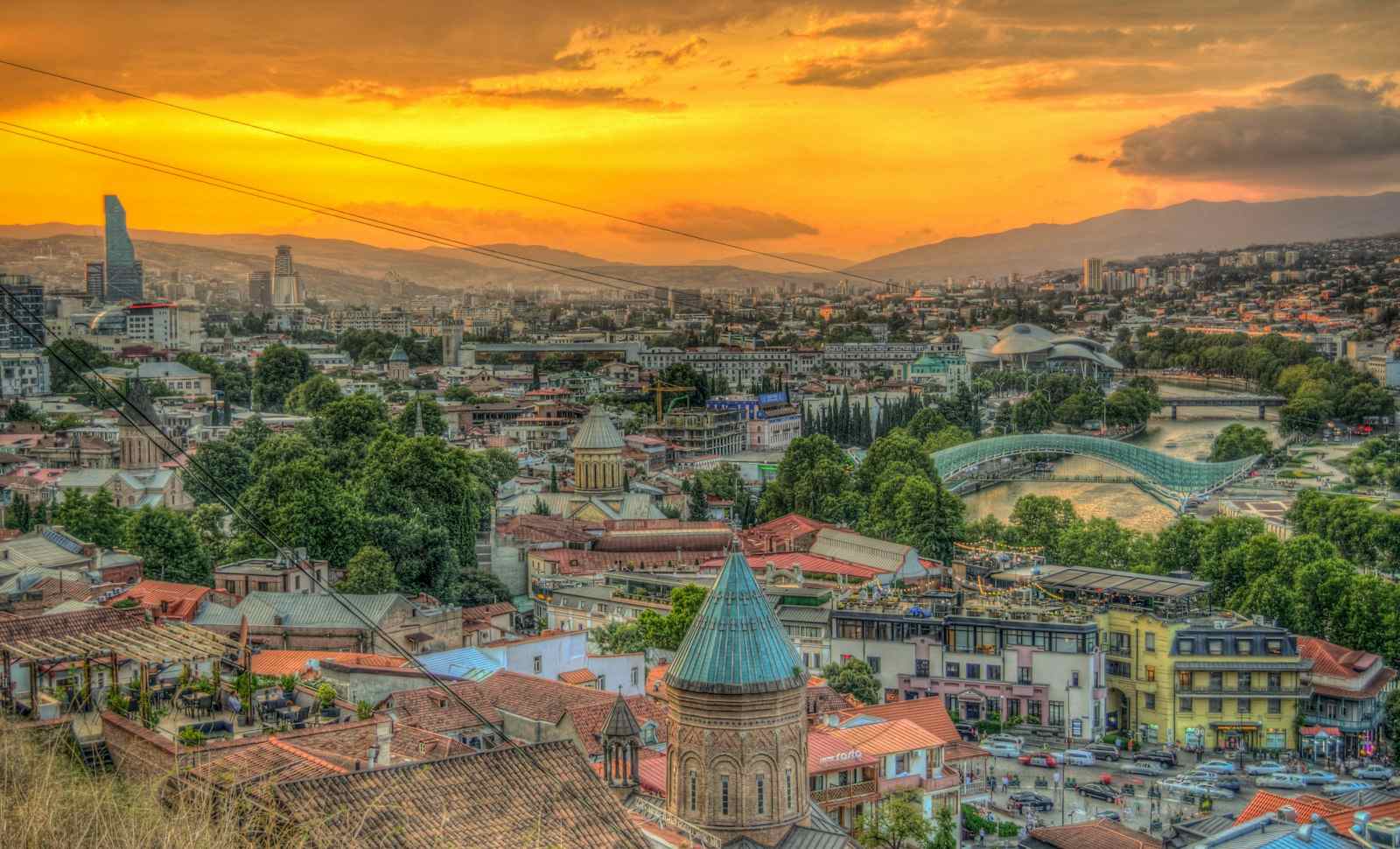
Old Town rooftops and Narikala views in Tbilisi, Georgia

Georgia · Europe

Tbilisi for digital nomads

Published By Nomad Terminal editorial

Researched from official docs and public sources.

Some links here are affiliate links: we may earn a commission at no cost to you. This never changes what we write. How we make money

Photo: Unsplash, free-to-use licence

Tbilisi at a glance Planning estimates, see method

Monthly cost, mid-range solo Estimate

~$900/mo

Typical wifi Estimate

60 Mbps

Safety score Estimate

8/10

Best months

May, Jun, Sep, Oct

English ease Estimate

5/10

Nomad community Estimate

Growing

These figures are editorial planning estimates, not measurements. No per-city source has been compiled for them yet. How we estimate.

Everything you need to stay in Tbilisi

A practical overview for remote workers: the visa path, the housing budget, the work setup, health, weather and tax. Each card links to the detail.

Tbilisi wins nomads over with two things at once: a genuinely low barrier to entry (visa-free for a year, cheap living, easy 1% tax status) and a city that turns out to have real character once you get past the visa paperwork. Balconied old streets, sulfur bathhouses, and a wine culture that predates most of Europe’s sit right next to a growing café-and-coworking scene built specifically for the nomad wave.

Where to base yourself in Tbilisi: Vera or Vake

  • Vera, the unofficial nomad hub, walkable and dense with specialty coffee shops, coworking spots, and some of the city’s best restaurants
  • Vake, a more polished, European-feeling district with embassies, international schools, and Vake Park, popular with families and professionals at a slightly higher price
  • Sololaki (Old Town), atmospheric and historic with cobblestone streets and courtyard wine bars, best for shorter stays given older buildings that need more upkeep

Food, Culture, and Daily Life

Georgian food alone justifies a long stay: khachapuri, khinkali, and a wine tradition that UNESCO recognizes as one of the oldest continuous winemaking cultures on earth. Tbilisi’s identity blends Orthodox church spires, Soviet-era architecture, and a genuinely creative, youthful energy that’s grown alongside the nomad and tech scene. The city is compact enough that most nomad neighborhoods are walkable to each other within twenty or thirty minutes.

Getting There and Getting Around

Tbilisi International Airport sits about 17 kilometers from the city center. Bus 337 is the cheapest way in, modern and air conditioned with room for luggage, while Bolt and Yandex Go both work reliably and are usually cheaper than a curbside taxi if ordered through the app using the airport’s free wifi.

Is Tbilisi safe for digital nomads?

Yes, day to day life in Vake, Vera, Saburtalo, and Sololaki is considered safe, with pickpocketing in crowds being the main thing to watch for rather than anything more serious.

Do I need a visa to live in Tbilisi as a nomad?

Most nationalities get 365 days visa-free entry, and Georgia’s Individual Entrepreneur tax status offers a 1% rate on qualifying turnover, making it one of the easiest countries on this site to start working from immediately.

Good and bad, in short

What works
  • 365-day visa-free entry for most nationalities
  • One of the lowest tax-residency barriers anywhere
  • Extremely low cost of living relative to Europe
Watch out for
  • English is spoken less outside nomad-heavy neighborhoods
  • Winters are colder than most nomads expect

What a month costs Estimate

  • Accommodation$400
  • Food$250
  • Coworking$80
  • Transport$25
  • SIM and data$10
  • Other$135

Directional split of about $900 a month for a mid-range solo stay. A lean budget can run about 30% lower, a comfort-first one about 50% higher. Method

Coworking spots

Fabrika

Converted Soviet factory, hostel + coworking + bar

$80/mo60 Mbps (operator claim or estimate)

Things to do

Wellness

Sulfur baths in Abanotubani

Historic bathhouses: private rooms available for first-timers.

Nomad tip: Book a scrub; it’s a social and cultural experience.

Culture

Narikala fortress cable car

Ride up for sunset views over the old town and river.

Food

Wine tasting (qvevri tradition)

Georgia invents wine history: do a cellar tasting in the city or Kakheti.

Nightlife

Fabrika courtyard hang

Hostel-creative complex with bars, shops, and nomad density.

Day trip

Day trip to Kazbegi or wine country

Mountains or vineyards: both define why people extend Georgia stays.

Nomad tip: Kazbegi is a long day; consider overnight.

Neighborhood

Rustaveli Avenue & museum row

Main cultural artery for architecture and galleries.