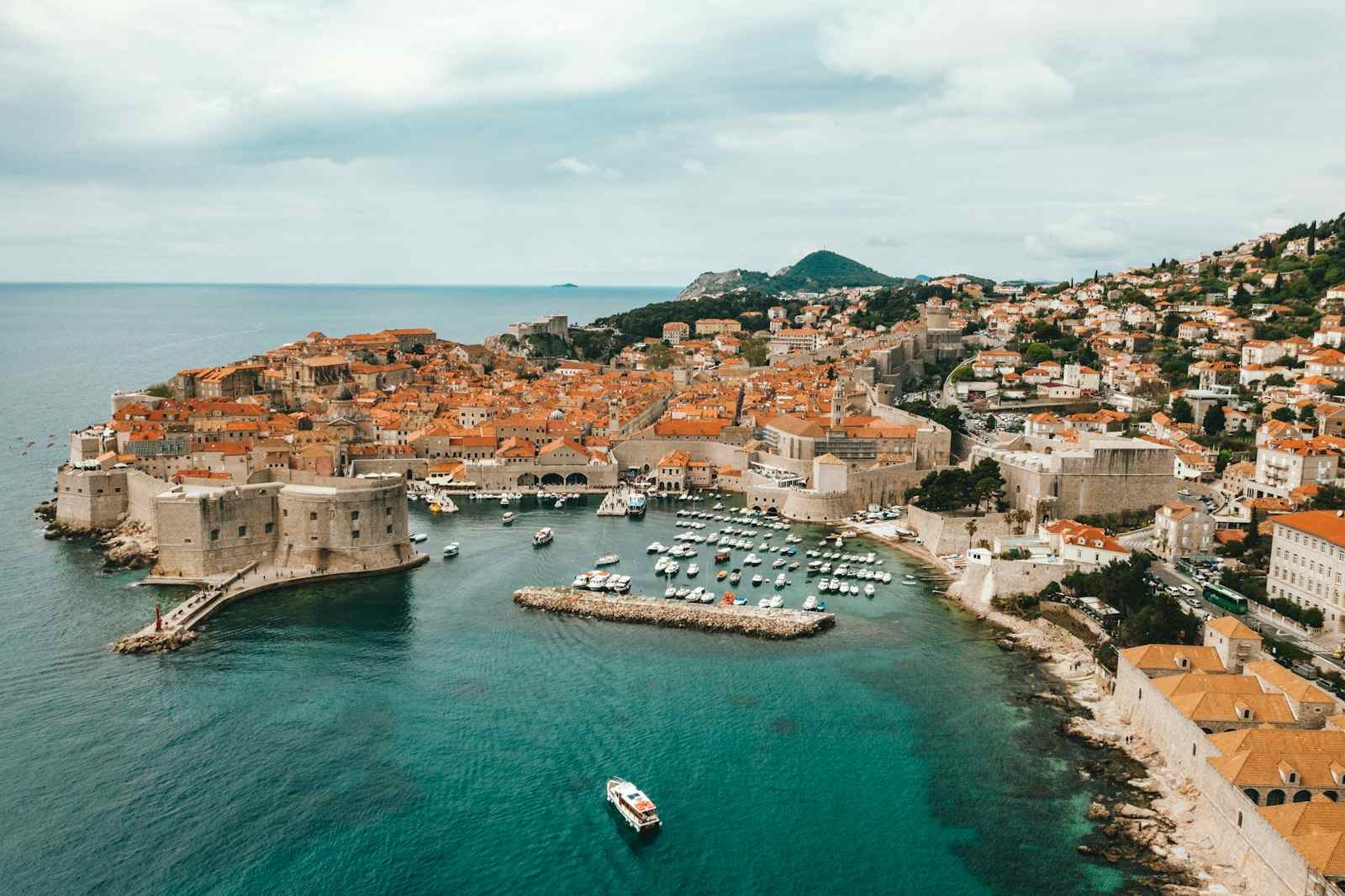
Split doesn’t announce itself the way other Adriatic cities do. You step off the plane, and within twenty minutes you’re standing inside a Roman emperor’s retirement palace that has quietly become the living center of a modern city, its old walls now packed with cafes, market stalls, and apartment doorways. Diocletian’s Palace isn’t a museum you visit once. It’s the neighborhood you live in.
Where to base yourself in Split: Varos or Bacvice
- Varos - a former fishermen’s quarter just west of the Old Town, stone alleys and local konobas, rent for a one-bedroom runs roughly 600 to 800 euros a month, quieter than the palace itself but still a five-minute walk to everything
- Bacvice - beach-side and lively, home to Split’s famous sandy city beach and the picigin ball game locals play in the shallows, best for nomads who want a swim before their first meeting
- Meje - leafy and residential, closer to the marina and the Marjan hill forest park, a good pick for longer stays and a slower pace once the novelty of the Old Town wears off
Food, Culture, and Daily Life
Life in Split moves at a Mediterranean rhythm: long coffees on Riva promenade, fresh fish at the morning market, and a genuine local culture that hasn’t been fully reshaped by tourism the way parts of the coast further south have. Dalmatian cooking leans on olive oil, grilled fish, and peka-style slow roasts, and the wine from nearby islands like Hvar and Vis is worth seeking out. Summers get intensely busy with cruise crowds and ferry traffic to the islands, so anyone planning a longer stay should weigh July and August against the quieter, cheaper shoulder seasons.
Getting There and Getting Around
Split Airport sits about 20 minutes from the city center, with a shuttle bus timed to flight arrivals and taxis or rideshare running 25 to 35 euros. The Old Town and most nomad neighborhoods are walkable, and Split also functions as the main ferry gateway to Hvar, Brac, and Vis, making it a practical base for weekend island trips without needing a car.
Is Split a good base for digital nomads or just a tourist stop?
Both, but increasingly the former. Croatia’s digital nomad residence permit and a growing coworking scene have made Split a genuine base, not just a stopover before the islands.
How busy does Split get in summer?
Very. Cruise ships and ferry traffic peak from June through August, driving up prices and crowding the Old Town. Spring and early autumn offer the same weather with far fewer people.