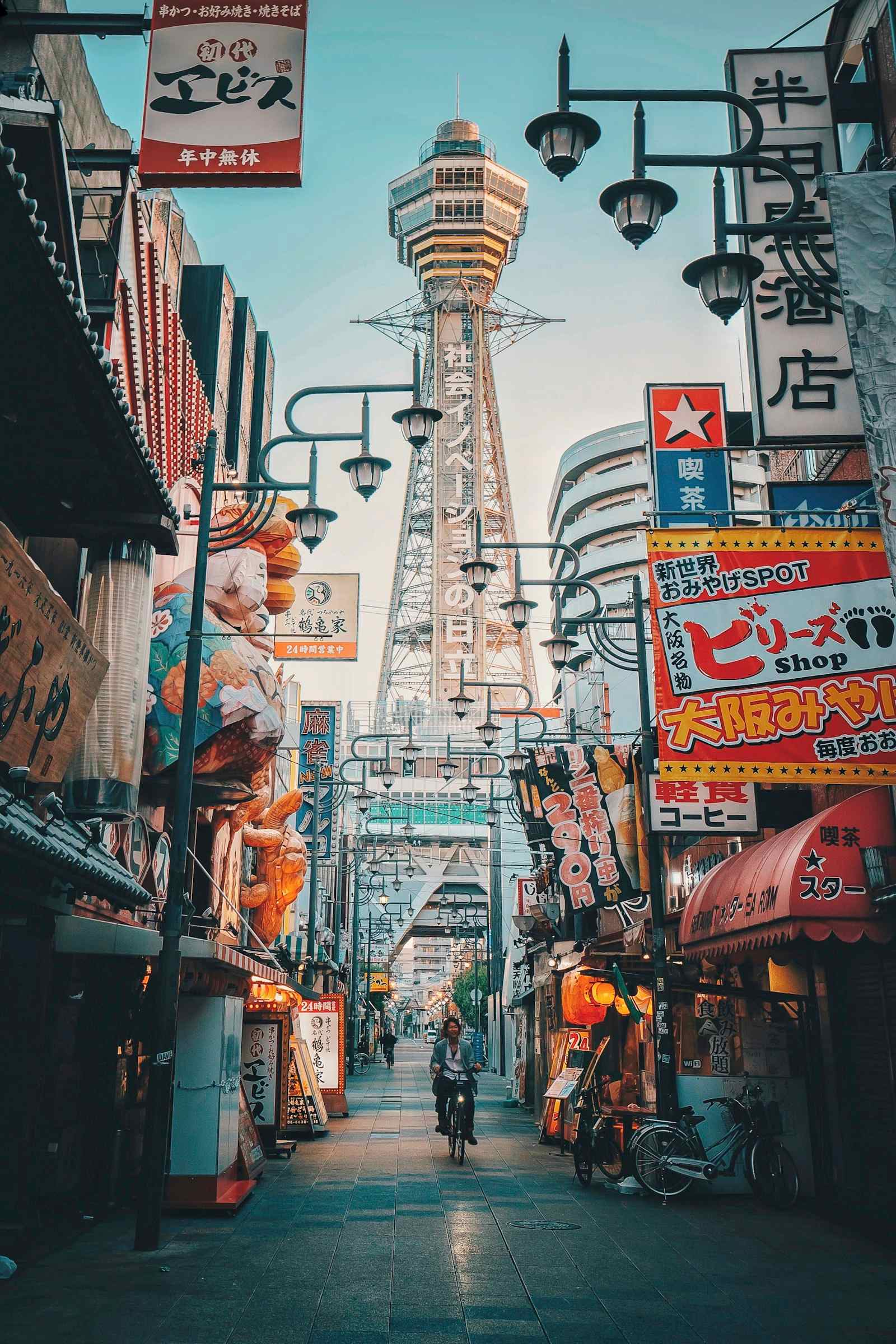
Osaka gives you Tokyo’s infrastructure and food obsession at a real discount, with a reputation as Japan’s most food-focused city that holds up under scrutiny. It’s brasher and more direct than the more reserved Tokyo, and the Kansai region’s dialect and humor give it a genuinely different personality within the same country.
Where to base yourself in Osaka: Umeda (Kita Ward) or Nakazakicho
- Namba and Shinsaibashi (Minami Ward), energetic, neon-lit, and tourist-heavy, best for nightlife, street food, and being in the middle of the action
- Umeda (Kita Ward), more polished and commercial with major train connections to Kyoto, Kobe, and Himeji, calmer and better suited to day-trip-focused stays
- Nakazakicho, a small, low-key pocket near Umeda with old wooden townhouses converted into specialty coffee shops and small galleries, popular for coliving communities
Food, Culture, and Daily Life
Osaka calls itself Japan’s kitchen, and takoyaki, okonomiyaki, and kushikatsu stalls back up the claim at every price point. The city is generally more casual and outgoing than Tokyo, both in daily interactions and nightlife, and Kansai Airport puts most of Asia within easy reach for anyone treating Osaka as a regional base rather than a single destination.
Getting There and Getting Around
Kansai International Airport connects to Namba Station via the Nankai Rapid Express (about 45 minutes) or the faster limited express Rapi:t (38 minutes). Once in the city, Osaka’s subway and train network is extensive and reliable enough that a car is never necessary, and the Midosuji Line specifically covers most nomad-relevant neighborhoods well.
Osaka or Tokyo, which is better for a nomad on a budget?
Osaka runs 20 to 30% cheaper than Tokyo for a comparable standard of living, while still offering excellent infrastructure, food, and connectivity.
Do I need Japanese to live in Osaka?
Not for daily nomad logistics, though English is less commonly spoken than in Tokyo, so basic Japanese phrases go further here in day-to-day interactions.