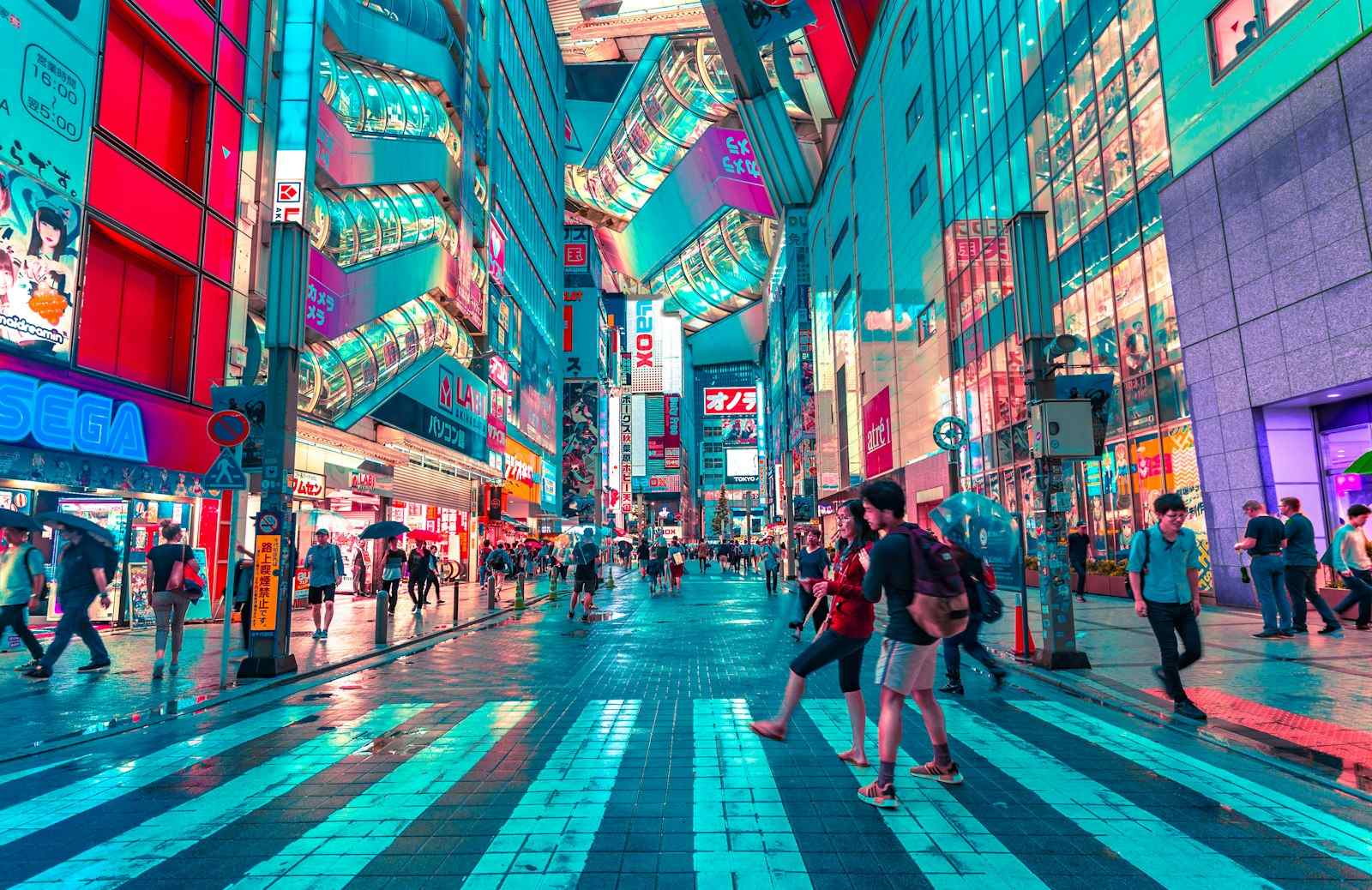
Tokyo is the rare megacity that gets calmer the more you understand its neighborhoods. What looks like undifferentiated urban sprawl from the outside resolves, once you’ve lived there a few weeks, into dozens of genuinely distinct small towns stitched together by the world’s most reliable train system, each with its own character, pace, and reason to base yourself there.
Where to base yourself in Tokyo: Shimokitazawa or Kichijoji
- Shimokitazawa, a bohemian, independent-fashion-and-live-music district that feels far calmer and more authentic than Tokyo’s major commercial centers
- Kichijoji, a laid-back, family-friendly area on the Sobu line with parks and a slower pace, popular with longer-staying nomads who want stability over nightlife
- Shibuya, the creative and youth-culture center, best for anyone who wants to be in the middle of Tokyo’s energy and startup scene rather than escaping it
Food, Culture, and Daily Life
Convenience store food alone could justify a stay (Japan’s konbini culture is genuinely excellent, not just a backup option), and that’s before counting the ramen shops, izakayas, and world-class fine dining that sit within a short train ride of nearly anywhere. Japanese social norms lean toward quiet, orderly public behavior, and daily life runs on a level of punctuality and cleanliness that takes most newcomers a few weeks to fully adjust to and then genuinely miss when they leave.
Getting There and Getting Around
Haneda Airport is closer to central Tokyo and generally the preferred arrival point when available; Narita, about 60km out, takes 40 to 90 minutes into the city but handles more long-haul international routes. Both airports now offer joint self-service kiosks that combine immigration and customs into a single step using the Visit Japan Web QR code, worth setting up before you fly. Once in the city, the train and subway network is comprehensive enough that most nomads never need a car.
Do I need to speak Japanese to live in Tokyo as a nomad?
Not for daily nomad logistics in central areas, most signage and transit apps have English support, but basic Japanese meaningfully improves everything from grocery shopping to making local friends.
Which is better for a first stay, Shimokitazawa or Shibuya?
Shimokitazawa for a calmer, more residential introduction to Tokyo; Shibuya if you want to be immersed in the city’s energy and startup scene from day one.