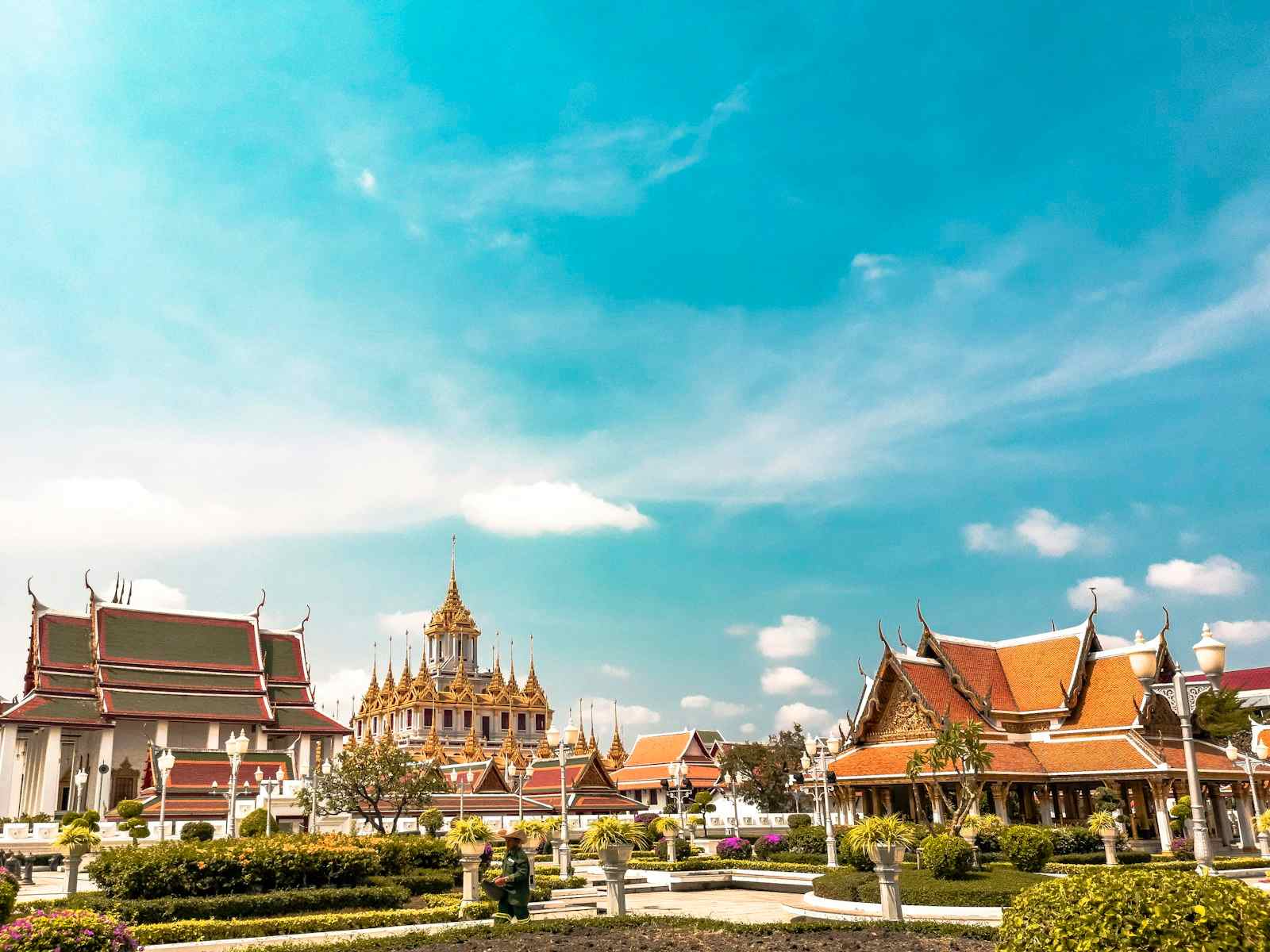
Wat Arun temple beside the Chao Phraya River at dusk, Bangkok

Thailand · Southeast Asia

Bangkok for digital nomads

Published By Nomad Terminal editorial

Researched from official docs and public sources.

Some links here are affiliate links: we may earn a commission at no cost to you. This never changes what we write. How we make money

Photo: Unsplash, free-to-use licence

Bangkok at a glance Planning estimates, see method

Monthly cost, mid-range solo Estimate

~$1500/mo

Typical wifi Estimate

200 Mbps

Safety score Estimate

7/10

Best months

Nov, Dec, Jan

English ease Estimate

7/10

Nomad community Estimate

Large

These figures are editorial planning estimates, not measurements. No per-city source has been compiled for them yet. How we estimate.

Everything you need to stay in Bangkok

A practical overview for remote workers: the visa path, the housing budget, the work setup, health, weather and tax. Each card links to the detail.

Bangkok doesn’t feel like a stopover city once you’ve lived in it for more than two weeks. It feels like a genuinely massive, functioning metropolis that happens to also be extremely easy to work remotely from, provided you respect one rule: stay near the BTS. The city rewards people who plan their neighborhood around the Skytrain and punishes anyone who doesn’t with some of the worst street-level traffic in Asia.

Where to base yourself in Bangkok: Sukhumvit or Thonglor & Ekkamai

  • Sukhumvit: the default nomad base: dense with coworking spaces, serviced apartments, and direct Airport Rail Link access, with both BTS and MRT coverage
  • Thonglor & Ekkamai: the trendier, pricier option: rooftop bars, Japanese dining, strong coworking (Hubba Ekkamai, The Hive Thonglor), and the best networking scene in the city
  • Ari: the ‘livable’ pick: leafy streets, artisanal coffee shops, a genuine local community feel without heavy tourist traffic, and noticeably cheaper rent

Food, Culture, and Daily Life

Bangkok’s street food scene is the reason half of long-term nomads never learn to cook: a proper meal costs less than making one at home, and it’s available on nearly every block, at nearly every hour. The city also runs 24/7 in a way few Southeast Asian capitals do: convenience stores, transit, and food don’t stop at 10pm. Culturally it’s a study in contrasts: glass-tower malls two blocks from centuries-old temples, all connected by the same Skytrain line.

Getting There and Getting Around

Suvarnabhumi Airport connects directly to the city center via the Airport Rail Link, reaching Phaya Thai station (with BTS transfer) in about 30 minutes for a fraction of a taxi fare. Once you’re in, being within walking distance of a BTS or MRT station is non-negotiable: Bangkok traffic is legendary, and a 2km trip by road can eat an hour during peak times that a train covers in ten minutes.

Do I need to speak Thai to live in Bangkok as a nomad?

No: English is widely used in nomad-heavy areas like Sukhumvit and Thonglor, though a few basic phrases go a long way outside those zones.

Is Bangkok cheaper or more expensive than Chiang Mai?

More expensive, generally: expect meaningfully higher rent in nomad-popular areas, offset by better international flight connections and a bigger city’s job/client-meeting infrastructure.

Good and bad, in short

What works
  • Best regional flight hub in Southeast Asia
  • Huge range of coworking spaces from budget to premium
  • World-class street food and healthcare
Watch out for
  • Traffic and commute times can eat into your day
  • More expensive than the rest of Thailand

What a month costs Estimate

  • Accommodation$600
  • Food$400
  • Coworking$130
  • Transport$80
  • SIM and data$15
  • Other$275

Directional split of about $1500 a month for a mid-range solo stay. A lean budget can run about 30% lower, a comfort-first one about 50% higher. Method

Coworking spots

The Great Room

Premium, business-meeting friendly

$250/mo300 Mbps (operator claim or estimate)

HUBBA Thailand

Startup-heavy, community events

$120/mo150 Mbps (operator claim or estimate)

Things to do

Neighborhood

BTS/MRT skyline hop: Siam → Asok → Chong Nonsi

Use the elevated rail to stitch malls, coworking towers, and rooftop bars without fighting street traffic.

Nomad tip: Get a Rabbit card day one: saves time every week.

Food

Chinatown (Yaowarat) night food run

One of Asia’s great street-food corridors: seafood, noodles, and dessert carts after dark.

Nomad tip: Go hungry after 7pm; harder with a laptop bag, leave it home.

Culture

Grand Palace & Wat Arun river pair

Classic Bangkok icons best done early; finish with a Chao Phraya river boat instead of a taxi.

Nomad tip: Book tickets ahead and dress modestly to skip re-entry drama.

Neighborhood

Chatuchak Weekend Market

Massive weekend market for clothes, plants, food, and people-watching, a full morning activity.

Nomad tip: Go early; by noon heat + crowds kill productivity the rest of the day.

Nightlife

Rooftop sunset (Sukhumvit or Silom)

Pick one decent rooftop for a monthly treat rather than nightly tourist pricing.

Day trip

Ayutthaya day trip by train

UNESCO ruins north of Bangkok: easy train day trip when you need history outside the city.

Nomad tip: Weekday trains are calmer; bring water and sunscreen.