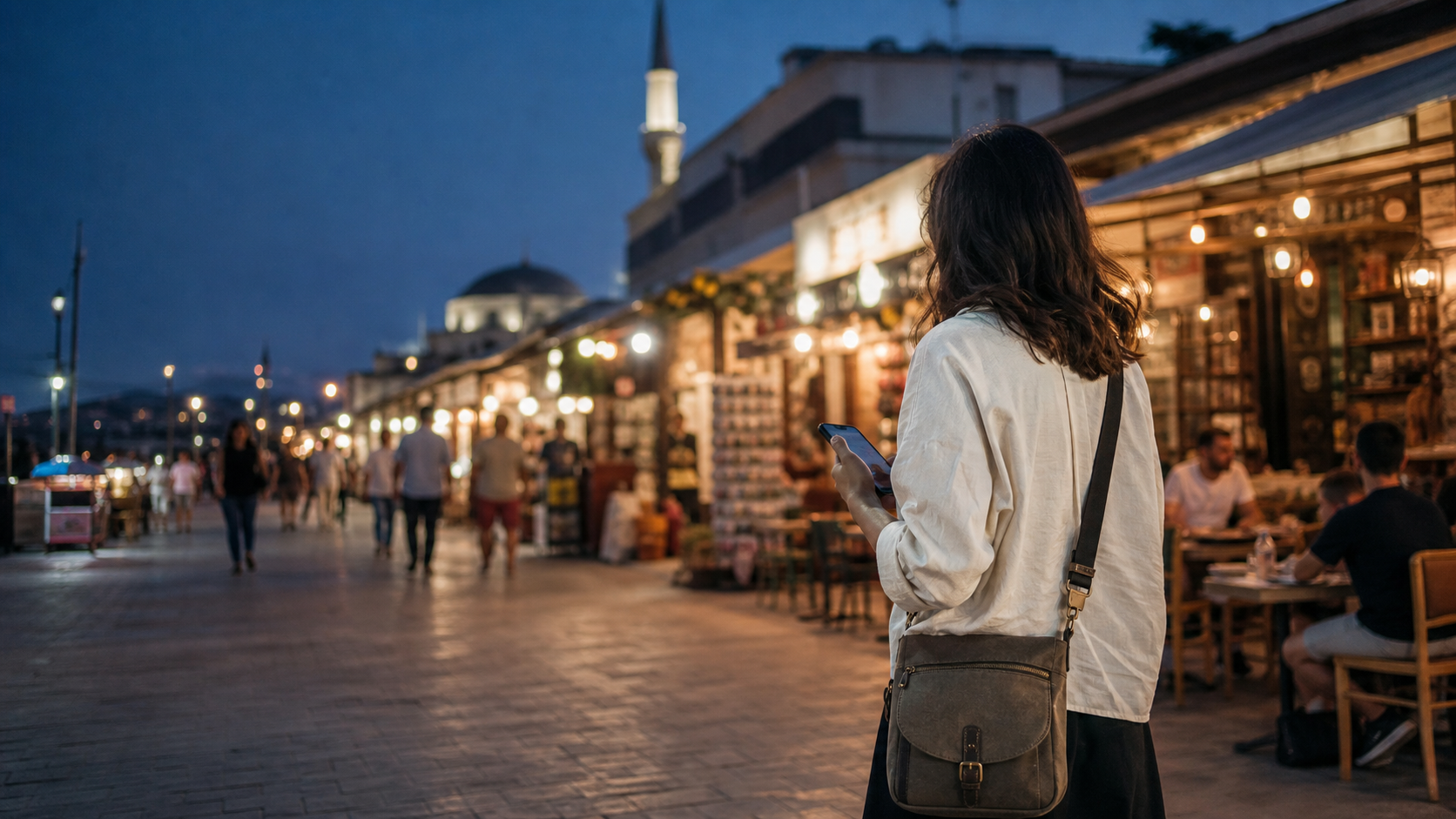
A calm, practical digital nomad safety guide covering arrivals, housing, transport, money, devices, health, emergencies, and everyday risk abroad.
Published: August 1, 2026
Scope: practical planning, not personal legal or tax advice
Safety abroad is often discussed in extremes. Either a destination is presented as perfectly safe, or every unfamiliar street becomes a warning story. Neither approach helps a person make good decisions. Digital nomad safety is a practical system for reducing avoidable risk while keeping enough attention available to enjoy the place you chose.
The useful questions are ordinary: How will I get from the airport to my first door? Where are my passport copies? What happens if my phone disappears? Which routes feel comfortable after work? Does insurance cover the activities I plan to do? Who knows where I am staying? Once those questions have answers, safety stops being a vague feeling and becomes a set of small habits.
- Before departure
- Check advisories, entry rules, health needs, documents, and insurance
- First arrival
- Use a known route, keep your phone charged, and simplify the first day
- Money rule
- Separate daily spending from backup funds and cards
- Emergency rule
- Know the emergency number, clinic route, and trusted contact early
Build a risk map before you book the flight
Start with official information, then add local context. Read the travel advisory for your nationality, check entry and visa conditions, review local laws, and look at current health guidance. Advisory levels are a starting point, not a verdict on every neighborhood. A city can contain very different experiences by district, time of day, transport route, and activity.
Write down the risks that matter to your trip. A surfer has different exposure than someone who works from an apartment. A solo traveler arriving at midnight has a different first-day problem than a family arriving in daylight with a pre-booked transfer. Your safety plan should follow your itinerary, not a generic list from a travel forum.
- Arrival: transfer, late check-in, cash, data, and address access.
- Housing: entry, locks, fire exits, route home, and host verification.
- Transport: taxis, rideshare, public transit, scooters, and driving conditions.
- Money: card theft, cash access, fraud, account recovery, and emergency funds.
- Work: device security, public Wi-Fi, confidential calls, and power loss.
- Health: medication, vaccines, food and water, activities, clinics, and insurance.
The first 24 hours matter more than the first 24 attractions
Arrival is when you have the least context and the most luggage, fatigue, and cognitive load. Make the first day simple. Save the accommodation address offline, including the local script if relevant. Keep your phone charged before leaving the airport. Use transport you researched in advance rather than negotiating while tired. If arriving late, prioritize getting inside a verified place and postpone exploration until daylight.
After resting, do a short orientation walk. Find the nearest food shop, pharmacy, ATM, transit stop, and well-lit route home. Save them in an offline map. Notice entrances and exits. This is not paranoia. It is the same preparation you would use in a new office building, except the language and street layout may be unfamiliar.
Make accommodation part of the safety plan
A rental does not need to look fortified to be sensible. Check that the main door closes and locks, that windows have expected latches, and that you understand building entry. Ask about fire exits and what to do if the elevator fails. Keep keys and cards in the same place. If the entrance opens onto a busy street, do not stand outside with your phone and bags while searching for the code.
Verify a host or manager before sending money, especially when the price is unusually low or the person creates urgency. Keep the agreement, address, contact details, and payment record offline. Photograph the apartment at arrival, including locks and existing damage. A clear record protects you in a dispute and helps you notice a problem before settling into the space.
A safe base is one you can enter, leave, and return to without improvising. Learn the normal route home before you need it late, with luggage, or with a low phone battery.
Move through a city with less friction
Most transport safety comes down to preparation and attention. Use licensed or reputable services, confirm the vehicle and driver before getting in, and share trip details when available. On public transit, keep your phone and wallet away from open pockets, especially when boarding and exiting. If you use a scooter or motorbike, take local road conditions seriously. A cheap rental is not a reason to skip a helmet, check insurance, or ride after a long flight.
Avoid unnecessary decisions at the end of the day. Save the route home. Carry enough cash for a short backup but not all your funds. If a street or station feels wrong, leave calmly and choose the busier route. Safety is not a performance of confidence. You do not owe an unfamiliar situation more time just because you started walking through it.
Protect money without making daily life difficult
Use a small daily wallet and keep backup cards and emergency cash separate. Turn on transaction alerts. Know how to freeze a card from your phone and how to contact the bank if the phone is lost. Keep one payment method physically separate from the rest. Save bank support numbers before departure.
Scams depend on distraction, urgency, or a story that makes you reveal more than intended. Be cautious with requests for passport details, banking information, one-time codes, or unexpected payments. State Department guidance is simple: do not send money to an unverified person abroad, protect personal information, and be suspicious of offers that seem too good to be true.
Device and account security for remote workers
Your laptop may contain more value than your wallet. Use a strong device passcode, automatic updates, multi-factor authentication, and encrypted backups. Keep the laptop out of sight when not using it. In a cafe, do not leave it on the table while ordering. In an apartment, do not assume a locked door removes every risk. A small cable lock can help in shared workspaces, but habits matter more than accessories.
- Use a password manager and unique passwords for email, banking, and work.
- Store recovery codes offline and separately from the primary device.
- Use your mobile data for sensitive activity on unfamiliar public Wi-Fi.
- Test remote-lock or wipe tools before travel.
- Keep client data in an approved secure service rather than only one laptop.
- Check screens, chargers, and adapters before leaving shared spaces.
Health planning is part of travel safety
A long stay creates more exposure to ordinary health problems as well as unusual ones. Visit a travel clinic or medical professional early enough to review routine vaccinations, destination-specific vaccines, medication legality, prescriptions, and planned activities. The CDC recommends that long-term travelers consider a consultation several weeks before departure because some preparations take time.
Carry medication in original packaging with a prescription or letter when appropriate. Keep a short medical summary with allergies, ongoing conditions, and emergency contacts. Check whether insurance covers outpatient care, evacuation, adventure activities, pre-existing conditions, and the full stay. Insurance is not a substitute for caution, but the wrong policy can turn a manageable problem into a serious financial one.
Know where you would go before you are sick
Save one clinic, one hospital, and one pharmacy near your accommodation. Ask your host, coworking community, or local colleague which facility is appropriate for ordinary care. Learn the local emergency number. In the European Union, 112 is the common emergency number, but numbers and services differ elsewhere. Keep the accommodation address written down in case you need to explain where you are while stressed.
Create an emergency folder
The best emergency plan is short enough to use with poor signal and a tired brain. Keep encrypted digital copies and, where practical, paper copies of your passport identification page, visa or entry record, insurance policy, prescriptions, emergency contacts, accommodation address, and bank support numbers. Share your basic itinerary and check-in expectation with one trusted person. Tell them what to do if you stop responding rather than asking them to guess.
- Local emergency number and the nearest suitable hospital.
- Home country's embassy or consulate details.
- Insurance assistance number and policy reference.
- Two trusted contacts with current accommodation and dates.
- Phone, bank, and email recovery instructions offline.
- Accessible emergency cash and a separate payment card.
A calm response to common problems
If your phone is stolen, get somewhere safe, lock the device remotely, contact the carrier, freeze cards, and tell your bank and close contacts. If you lose your passport, report it locally and contact the embassy or consulate using the copies you prepared. If you are followed or feel threatened, enter a busy staffed place and ask directly for help. If scammed, stop sending money, preserve messages and receipts, and report through the relevant platform or authority.
The sequence matters. Move away from the immediate problem first. Then secure identity, money, communication, and documentation. Do not spend an hour trying to recover a stolen object while standing in the same place. A plan gives you permission to make the next useful move instead of solving the entire incident at once.
If you are in immediate danger, prioritize local emergency services and a staffed safe location. Online advice is for preparation and follow-up, not for replacing urgent professional help.
The everyday habits that actually scale
- Keep your phone charged before a long day.
- Tell someone when you change accommodation or take a remote trip.
- Use a discreet bag and avoid displaying expensive gear in crowds.
- Learn words for help, police, hospital, pharmacy, and your address.
- Review local laws around photography, drones, medication, driving, and public behavior.
- Walk with awareness rather than with your eyes fixed on a map.
- Trust discomfort early and choose the boring, well-lit option when tired.
Safety without shrinking your life
A good safety system should make you more available to the place, not less. Once documents are backed up, your route home is familiar, and work devices are protected, you can stop running a constant internal risk assessment. You can take the local bus, join a dinner, work from a new neighborhood, or stay out for a concert while still having a sensible way home.
No destination comes with a universal safety label, and no checklist removes every uncertainty. The useful standard is different: make high-consequence problems harder to cause, make ordinary problems easier to recover from, and keep enough humility to change your plan when conditions change. That is practical digital nomad safety.
Make the next decision with the same context
Move from inspiration to the legal stay, city budget and risk checks that determine whether the plan works.


