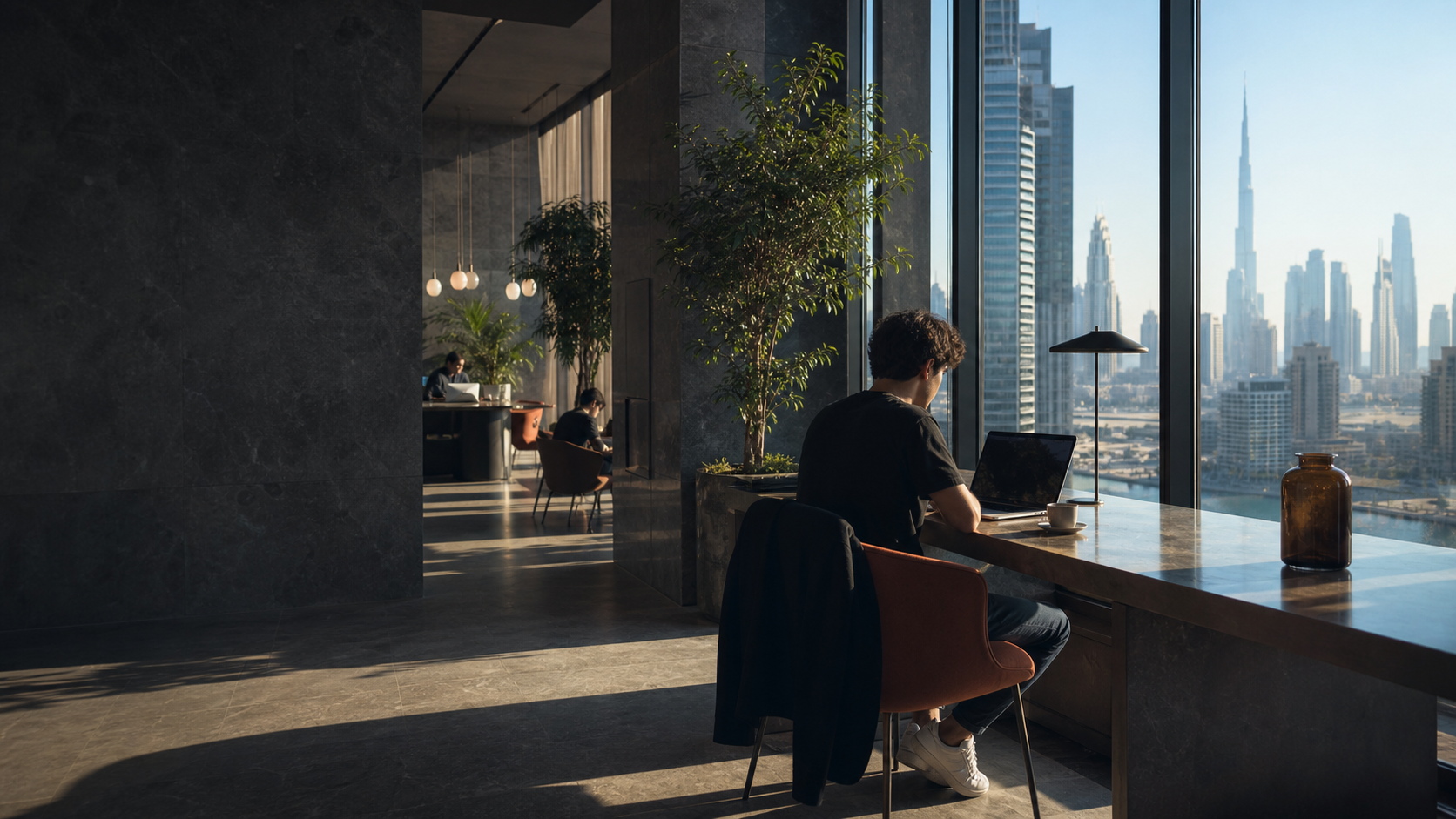
A practical Ho Chi Minh City coworking guide comparing Toong, cirCO and The Hive by location, work style, call quality, transport, monthly passes and the new metro corridor.
Published: August 8, 2026
Scope: practical planning, not personal legal or tax advice
Ho Chi Minh City is one of the easiest places in Asia to work from a laptop and one of the easiest places to choose the wrong work setup. The cafe culture is excellent, the internet is usually more than adequate, and a cheap apartment can make a month look wonderfully simple on paper. Then a client call collides with a blender, a downpour turns a short walk into a soaked commute, or a quiet-looking street becomes an all-day motorbike orchestra. The right coworking space is less about the prettiest interior than about where it sits in your weekly map, what kind of calls you take, and whether you will actually return after the first novelty wears off.
- Best central starting point
- District 1, where Toong, cirCO and The Hive make a structured workday easy to test
- Best for a neighborhood routine
- Thao Dien, if you want cafes, apartments and a large international community around the desk
- Best airport strategy
- Phu Nhuan or a Republic Plaza workspace for arrival and departure weeks, not necessarily a full month
- Best transport mindset
- Choose the work venue after choosing the apartment; a short Grab or walk beats a cross-city commute
- Site planning baseline
- Ho Chi Minh City is modeled at about $950 per month before premium housing or heavy coworking use
Venue prices, branch hours, access rules and membership promotions change quickly. This guide reflects research checked in August 2026. Treat any listed price as a starting point, confirm tax and access terms with the operator, and take a day pass before committing to a long plan.
The short answer: pick the district before the desk
For most first-time nomads, District 1 is the safest place to test coworking because it compresses business services, hotels, restaurants, cafes and several operators into a relatively manageable area. The official Ho Chi Minh City tourism office describes the district as the city's administrative and commercial heart, which is exactly why it works for a first workweek: you can run errands, meet someone, and try more than one venue without building your day around traffic. It is busy and can feel aggressively urban, but that intensity is useful when you are still learning how Saigon fits together.
Thao Dien is a different proposition. It is a residential and social base in the Thu Duc side of the city, with a strong cafe and international-service ecosystem. It often suits the nomad who wants to stay in one neighborhood for a month, work mostly from a home desk or local cafe, and use coworking for important calls, community events and occasional focused days. District 3 and parts of Binh Thanh sit between those modes: closer to central meetings than Thao Dien, less concentrated than District 1, and often better for people who want a more lived-in street rhythm.
Toong: the dependable network option
Toong is the most useful first operator to investigate if you want a recognizable Vietnamese coworking network rather than one isolated room. Its Ho Chi Minh City offer covers serviced offices, coworking, reception, printing, pantry facilities, event areas and other practical services. The appeal is operational: if your work needs a proper desk, a meeting room, predictable reception and an address that can handle a client visit, Toong is closer to a work infrastructure provider than a cafe with better chairs.
The tradeoff is that a network is not a guarantee that every branch feels the same. Before buying, ask which locations your plan actually includes, whether hot desks are bookable, what happens when a branch is full, and whether evening or weekend access means a staffed space or simply permission to enter. For a nomad, the most valuable Toong plan is often the one that matches the place you are staying and gives you one credible backup location, not the plan with the longest list of amenities.
Who should choose Toong?
- Remote employees who need a professional environment for regular video calls and occasional meetings.
- Founders and consultants who want reception, printing and a credible place to meet without renting a private office.
- Nomads staying in or near District 1 who prefer a structured workday over a cafe-hopping routine.
- People who want to test more than one Vietnamese city later and value a regional operator relationship.
cirCO: a flexible choice for D1, D3 and D4
cirCO is compelling when you want location flexibility inside the central city. Its official locations page lists branches in District 1, District 3 and District 4, and the offer spans flexible desks, dedicated desks, meeting rooms, event space and virtual-office services. That spread gives cirCO a practical advantage for a nomad whose apartment or meetings move around the center. You can stay close to the local life of District 3, take a client meeting in District 1, and still avoid making every workday a cross-city expedition.
The most important question for cirCO is not whether the space looks good in photographs; it is how the membership behaves at the hours you work. Confirm phone-booth availability, meeting-room credits, guest policy, printing limits, air-conditioning hours and the process for changing branches. If you take calls with Europe in the late afternoon or North America after dinner, test the venue at that time. A comfortable daytime hot desk is not automatically a good international-call base.
cirCO is strongest for a moving central week
Use cirCO as a network experiment: choose the branch closest to your accommodation for the first day, then try the branch closest to your most important meeting. Measure the actual door-to-desk journey, not the distance on a map. In Ho Chi Minh City, a road crossing, heat, rain and the availability of a quick motorbike taxi can matter more than the nominal number of kilometers. A venue that saves twenty minutes each way can return more value than a slightly cheaper membership.
The Hive District 1: a polished city-centre base
The Hive District 1 is aimed at people who want a central, polished workspace with enough scale for both solo work and small teams. The operator describes a six-floor coworking and flexible-office environment with hot desks, dedicated desks, private offices, meeting rooms and event space, including private offices that can accommodate teams up to about 35 people. That matters if your work sometimes expands beyond a laptop: you can use the same address for a workshop, a partner meeting or a short project sprint.
The Hive's wider membership model can also be useful if you move between cities, but verify the local terms rather than assuming a global brand equals unlimited access. Ask how many locations are included, whether booking is required, which amenities are included in the base plan, and whether the specific D1 site stays comfortable during busy periods. The Hive is a good candidate for a first paid month when your priority is a reliable central room, community programming and an environment that feels more intentional than a borrowed cafe table.
Toong Cong Hoa and the airport-side workday
An airport-side workspace is not the obvious choice for a full stay, but it is an excellent tool for a nomad with an awkward arrival, departure or short business stop. Toong Cong Hoa is located in Republic Plaza on Cong Hoa Street, close to Tan Son Nhat Airport, and the operator highlights runway views, tours and a flexible price range. If you have a late flight, an early departure or a day between accommodation bookings, this kind of location can save a trip back into District 1 simply to find a desk and stable Wi-Fi.
The airport corridor also makes sense for a workday built around logistics: collect a SIM, finish a deadline, take a call, and leave when the traffic window is favorable. It is less attractive if your reason for being in Ho Chi Minh City is neighborhood life, evening food or daily social contact. Treat the airport area as a tactical work base. Book it when the calendar demands it, then choose your longer-term neighborhood based on how you want to live after the laptop closes.
Thao Dien, District 3 or District 1: matching the space to your life
- District 1
- Best for first-week logistics, central meetings, hotels, errands and trying multiple operators
- District 3
- A useful middle ground for a calmer residential feel without giving up central access
- Thao Dien
- Best when your apartment, cafes and community can all sit in one neighborhood
- District 4
- Worth considering if a cirCO location and central commute fit your exact apartment search
- Phu Nhuan / airport corridor
- Strong for airport weeks and practical access; choose carefully for noise and street comfort
The common nomad mistake is to choose a coworking brand first and then search for housing near it. Reverse that order. Decide whether your month is about central meetings, a social neighborhood, a quiet apartment, or easy airport access. Then shortlist two or three operators within a realistic daily radius. Your work venue should support the life you want; it should not quietly dictate a commute that makes the city feel smaller and more tiring than it is.
Getting around: the metro helps, but the address still wins
Ho Chi Minh City's Metro Line 1 now gives the central city a more useful rail spine between Ben Thanh and Suoi Tien, and the official urban-rail authority publishes route information for the line. It improves the logic of the eastern corridor, especially for people moving between central districts, Binh Thanh, Thao Dien and Thu Duc. It does not turn the city into a simple rail-only commute, though. Your last kilometer still matters, and a short GrabBike, walk or local bus connection can decide whether the venue feels convenient in the real weather.
Plan the commute at the hour you will actually travel. Visit the building during morning traffic, walk the final crossing, and check whether rain leaves you exposed between the station and the lobby. Official city tourism guidance also points to different cycling corridors toward Thao Dien, Phu My Hung and the eastern side of the city, but a cycling route that looks attractive at dawn may not be the route you want after a long call. Ho Chi Minh City rewards flexible transport, not rigid assumptions.
Cafe culture is a supplement, not always a work system
Saigon's cafes are one of the reasons people love working here. The official tourism office highlights local coffee traditions and neighborhoods including District 1, District 3, Phu Nhuan and Thao Dien. Use that variety deliberately: cafe mornings are excellent for writing, research and low-stakes admin, while coworking afternoons can handle calls, deep focus and the days when you need a proper chair. The strongest monthly setup is often hybrid rather than ideological.
Be honest about the work you are asking a cafe to perform. A cafe can be perfect for two hours and poor for six. Music, table turnover, socket scarcity and a changing noise floor are not moral failures; they are simply different operating conditions. If your income depends on clear calls or long concentration, pay for the infrastructure on those days. The money is easier to justify when you compare it with one missed meeting, one emergency Grab across town, or the hours lost searching for a seat.
Vietnam entry planning: the e-visa is not a coworking permission slip
Vietnam's official e-visa portal currently describes an e-visa of up to 90 days, available for single or multiple entry, with listed fees of US$25 for single entry and US$50 for multiple entry. Vietnam's official tourism site also says that citizens of all countries and territories can apply through the official system. That is useful travel infrastructure, but do not describe the e-visa as a dedicated digital-nomad visa or assume that immigration permission answers every question about local work, clients, tax or employment.
Immigration status, tax residency and permission to provide services are separate questions. Use the official Vietnamese immigration portal for your application, keep evidence of your onward plan and accommodation, and get qualified advice if you will work with a Vietnamese entity, hire locally, invoice local clients or stay long enough for tax-residency questions to matter.
Budgeting for coworking in Ho Chi Minh City
Nomad Terminal's city model uses about $950 per month as a planning baseline for one person in Ho Chi Minh City. That number is useful for comparison, not a promise that every month will land there. Housing, neighborhood, season and how often you use paid workspaces can move the real total substantially. The existing coworking model lists Toong Saigon from about $140 per month, but current operator pricing, tax and access terms should be checked directly before you build a budget around it.
- Start with housing and the work commute together. A cheaper apartment far from the venue can erase the saving through rides and lost time.
- Set aside a paid-coworking allowance for important calls and deadline days even if you plan to work from cafes most of the month.
- Price meeting rooms, printing, guest access, deposits and tax separately; the headline desk price rarely includes every use case.
- Keep a weather and transport buffer. Heavy rain and peak traffic are operating costs when attendance matters.
A seven-day test before buying a monthly pass
- Day one: work from the venue closest to your apartment and record the true door-to-desk trip in morning traffic.
- Day two: take your most important call and test the booth, headset performance, background noise and upload stability.
- Day three: try a second operator in another district so you can compare the working experience rather than the marketing copy.
- Day four: work from a cafe for half a day and write down what you actually missed: quiet, sockets, monitor, meeting room or community.
- Day five: ask for the full price including tax, deposit, cancellation, guest access, lockers and meeting-room credits.
- Days six and seven: use the preferred venue at your real work hours, including the late afternoon or evening if your team is overseas.
The best Ho Chi Minh City coworking space is the one that makes your month more repeatable. Toong is a strong network and infrastructure choice, cirCO is useful when your central routine moves, The Hive D1 is a polished city-centre base, and Toong Cong Hoa is a smart tactical answer for airport-side work. Once you have chosen the neighborhood that fits your life, the decision becomes much easier: buy only the infrastructure your actual work requires and let the rest of Saigon stay open for exploration.
Official sources and related Nomad Terminal guides
Research note: venue details, transport operations, entry rules and prices are time-sensitive. This article was researched on August 8, 2026; use the official operator and immigration links above to re-check anything that affects a booking or application.
Make the next decision with the same context
Move from inspiration to the legal stay, city budget and risk checks that determine whether the plan works.